Some military barracks 'chronically neglected' due to $285 billion in maintenance backlogs, GAO finds
A GAO report found that the department underperforms in funding maintenance needs as recommended by its Facilities Sustainment Model.
Rights: fair use excerpt
Executive Summary
The U.S. Government Accountability Office has issued a sobering assessment of the nation's military infrastructure, revealing that inadequate funding has left numerous service-member housing units in a state of severe disrepair. According to a new federal audit, the backlog for preservation and repair projects across defense properties has reached a staggering $285 billion. This multi-billion-dollar shortfall has resulted in what watchdogs describe as housing that is "chronically neglected," raising serious questions about how the Pentagon manages its massive real estate portfolio.
At the heart of the issue, the congressional watchdog explains, is a persistent gap between estimated upkeep requirements and actual defense spending. The auditing agency notes that the defense department consistently fails to allocate sufficient capital to meet its own internal benchmarks for property preservation. By falling short of the targets outlined in the Pentagon's established framework for facility upkeep, military branches have allowed deferred maintenance to accumulate over years, leading to the current crisis in troop housing conditions.
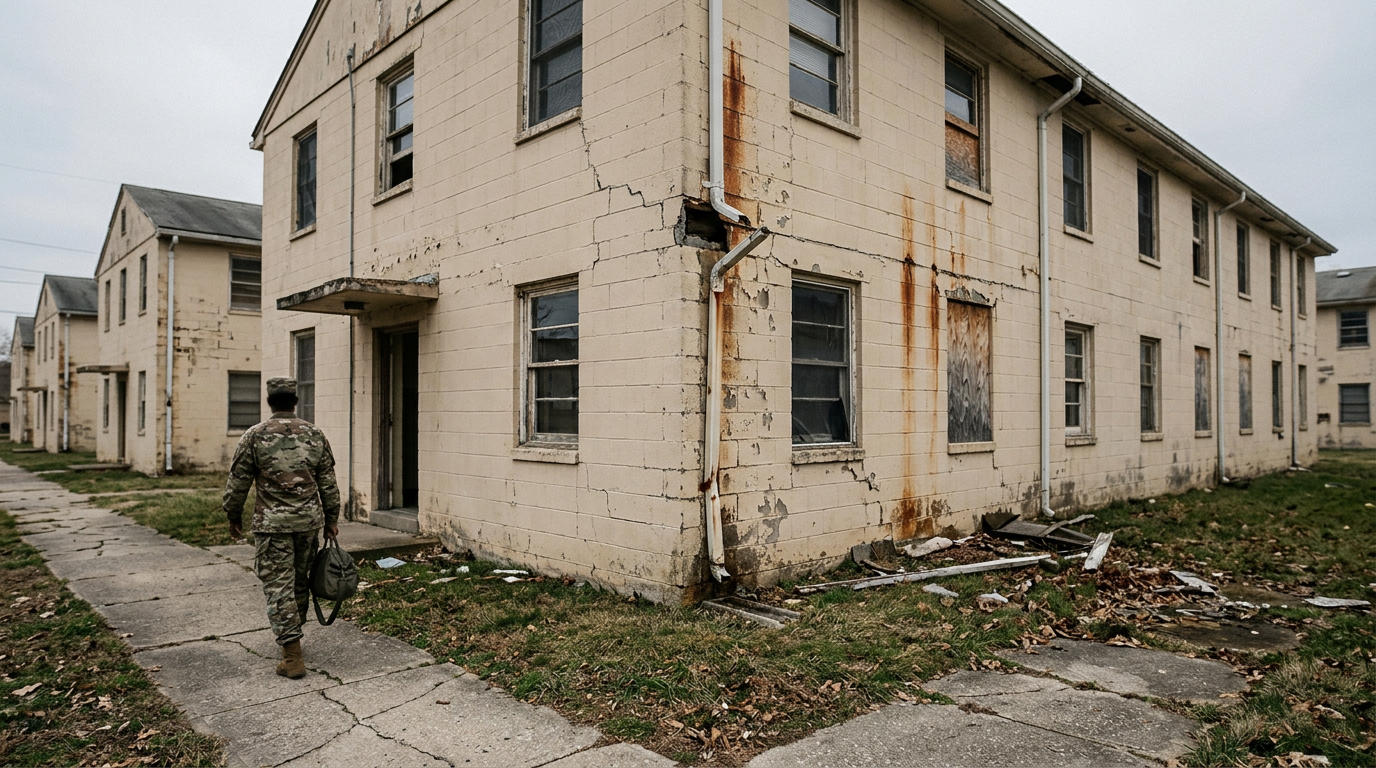
The consequences of this multi-billion-dollar deficit are visible in barracks that have suffered from years of inadequate upkeep. With a backlog of $285 billion, the scale of the deferred maintenance suggests that basic living standards for personnel are being compromised. The oversight report highlights that the current approach to funding facility preservation does not keep pace with the natural aging of these structures. Consequently, what should be routine repairs have evolved into systemic failures, compounding the overall cost of restoration and leaving troops to reside in substandard environments.
By failing to satisfy the investment levels proposed by the defense establishment's proprietary modeling for facility preservation, the department has created a self-reinforcing cycle of decay. When preventative maintenance is bypassed in favor of other budgetary priorities, the physical integrity of the installations degrades at an accelerated rate. This pattern of underfunding suggests a structural misalignment in how federal defense dollars are prioritized, putting immediate operational demands ahead of the long-term stewardship of national defense assets and the welfare of those who serve.
For leaders in business, military veterans, and public sector executives, this infrastructure crisis highlights a critical intersection of national security, operational readiness, and fiscal responsibility. Proper stewardship of defense infrastructure is not merely a matter of comfort; it directly impacts service-member retention, overall morale, and the domestic defense supply chain. As policymakers and business leaders look to optimize public spending and support those in uniform, addressing this massive maintenance backlog represents both a significant operational challenge and an opportunity for innovative public-private solutions in facility management and infrastructure modernization.
This Executive Summary is an original synthesis by Valor & Ventures Media editors based on public reporting by Military Times. For the complete original article, please visit the source.
A GAO report found that the department underperforms in funding maintenance needs as recommended by its Facilities Sustainment Model.
— Cristina Stassis · Military Times
Read the full report at Military Times: https://www.militarytimes.com/news/pentagon-congress/2026/08/21/some-military-barracks-chronically-neglected-due-to-285-billion-in-maintenance-backlogs-gao-finds/
Reporting and photography credited as noted above. Originally published by Military Times. The hero image on this page is an AI-generated illustration created by Valor & Ventures Media — not a photograph from the source publication.
Checking your membership…