Demiralp: Inflation Outlook Blocking Turkey Rate Ease
Turkey's central bank said it would resume weekly repo auctions at its 37% policy rate. The decision is a step towards normalizing funding conditions as the central bank bets the worst of the Iran War's economic fallout has passed. Selva Demiralp, Professor of Economics at Koç University spoke to Bloomberg’s Abeer Abu Omar on the move from the Central Bank & its impact on inflation in Turkey. (Sou
Executive Summary
The Central Bank of the Republic of Turkey has announced that it will restart its weekly repurchase agreement operations, keeping its primary benchmark interest rate at 37 percent. According to a Bloomberg report, this operational decision is designed as a direct step toward restoring standard funding environments across the nation's financial sector. The monetary shift marks a critical juncture for Turkish financial authorities as they seek to navigate the economic aftermath of severe regional instability.
This central bank action comes as monetary policymakers wager that the most severe economic consequences from the war involving neighboring Iran have now peaked. Throughout the conflict, regional disruptions have complicated Turkey's domestic financial landscape, forcing the monetary authority to alter its standard operations. By returning to these weekly liquidity actions, the bank signals its belief that the immediate geopolitical shocks are beginning to subside, allowing for a return to more predictable financial management structures.
The resumption of these funding operations at the 37 percent policy rate is intended to streamline how commercial lenders secure short-term capital on a regular basis. Restoring these standard funding procedures is essential for stabilizing the domestic credit market, which has faced significant pressure during the regional crisis. By returning to this standard policy mechanism, the monetary authority is attempting to repair its transmission channels and reassure both domestic and international markets of its operational consistency during turbulent times.
In an interview with Bloomberg's Abeer Abu Omar, Selva Demiralp, an economics professor at Koç University, provided a detailed assessment of the bank's decision and its implications for the country. Demiralp focused on the direct relationship between these monetary maneuvers and the nation's ongoing battle with rising prices. The discussion highlighted that while normalizing funding is a positive operational step, the underlying inflation outlook remains a major obstacle that prevents the central bank from lowering its interest rates, thereby keeping the benchmark rate at its current high level.
For the founders, corporate executives, and civic-minded leaders who make up the Valor & Ventures Media audience, this situation offers a compelling look at macroeconomic management under extreme duress. Operating business entities or managing investments in regions affected by geopolitical conflict requires a deep understanding of how central banks react to external shocks. Turkey's attempt to balance operational normalization with a restrictive 37 percent borrowing rate serves as a key indicator of how emerging markets manage capital costs, price stability, and risk in the wake of international crises.
This Executive Summary is an original synthesis by Valor & Ventures Media editors based on public reporting by Bloomberg. For the complete original article, please visit the source.
Turkey's central bank said it would resume weekly repo auctions at its 37% policy rate. The decision is a step towards normalizing funding conditions as the central bank bets the worst of the Iran War's economic fallout has passed. Selva Demiralp, Professor of Economics at Koç University spoke to Bloomberg’s Abeer Abu Omar on the move from the Central Bank & its impact on inflation in Turkey. (Sou
---
Bloomberg
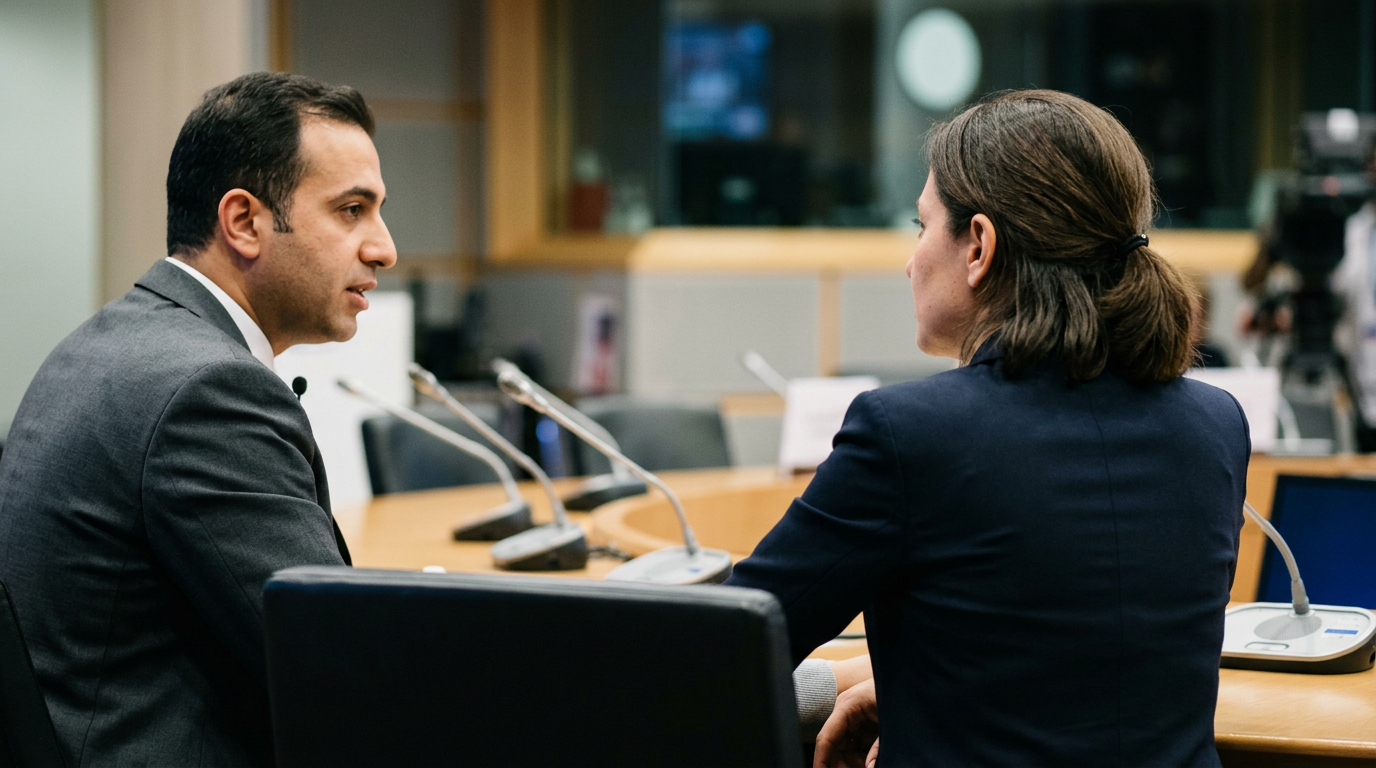
Reporting and photography credited as noted above. Originally published by Bloomberg. The hero image on this page is an AI-generated illustration created by Valor & Ventures Media — not a photograph from the source publication.
Checking your membership…