Richmond Fed’s Tom Barkin on the Surprisingly Resilient Real Economy
The implications of Fed Chair Kevin Warsh's Jackson Hole speech are pretty clear: Traders expect a rate hike given the hawkish hints littered in his address, largely focused on inflation. There are still a number of open questions and Warsh's lack of forward guidance does not exactly lend clarity to how the Fed will act in the coming months. Today, we recap the speech — in a conversation recorded
Executive Summary
Federal Reserve Chair Kevin Warsh's recent address at the Jackson Hole symposium has ignited intense speculation across global financial markets regarding the future path of monetary policy, according to a report by Bloomberg. Market participants and analysts immediately began parsing the leader's remarks, identifying distinct hawkish signals that concentrated heavily on persistent inflationary pressures. This pivotal address, alongside emerging discussions regarding the broader health of the domestic market, highlights the delicate balance the central bank is currently attempting to strike.
A key challenge emerging from the symposium is the deliberate ambiguity maintained by the central bank's leadership. Bloomberg reports that the Fed Chair did not offer explicit forward guidance during his remarks, leaving several critical questions unanswered. This lack of a definitive policy roadmap has left traders and corporate strategists with little clarity on how monetary policymakers intend to act in the coming months. Consequently, while the hawkish tone suggests a bias toward raising rates, the specific timing and magnitude of future policy adjustments remain highly uncertain.
Controlling inflation remains the primary focus of the Federal Reserve's current posture, even as other sectors of the market demonstrate unexpected strength. In a recorded discussion highlighted by Bloomberg, Richmond Federal Reserve President Tom Barkin drew attention to what he termed a "surprisingly resilient real economy." This underlying durability presents a complex puzzle for policymakers; while a strong economy supports employment and business activity, it also risks keeping inflationary pressures elevated, thereby reinforcing the case for the rate hikes that traders now anticipate.
For corporate executives, military veterans in leadership, and growth-focused founders, this environment of economic resilience paired with monetary uncertainty requires a highly disciplined approach to strategic planning. Operating an enterprise without clear forward guidance from central bankers means that capital budgeting, debt management, and expansion plans must be stress-tested against the likelihood of sustained higher borrowing costs. Maintaining organizational flexibility and closely monitoring inflationary inputs will be vital for leaders navigating this next phase of the economic cycle.
This Executive Summary is an original synthesis by Valor & Ventures Media editors based on public reporting by Bloomberg. For the complete original article, please visit the source.
The implications of Fed Chair Kevin Warsh's Jackson Hole speech are pretty clear: Traders expect a rate hike given the hawkish hints littered in his address, largely focused on inflation. There are still a number of open questions and Warsh's lack of forward guidance does not exactly lend clarity to how the Fed will act in the coming months. Today, we recap the speech — in a conversation recorded
---
Bloomberg
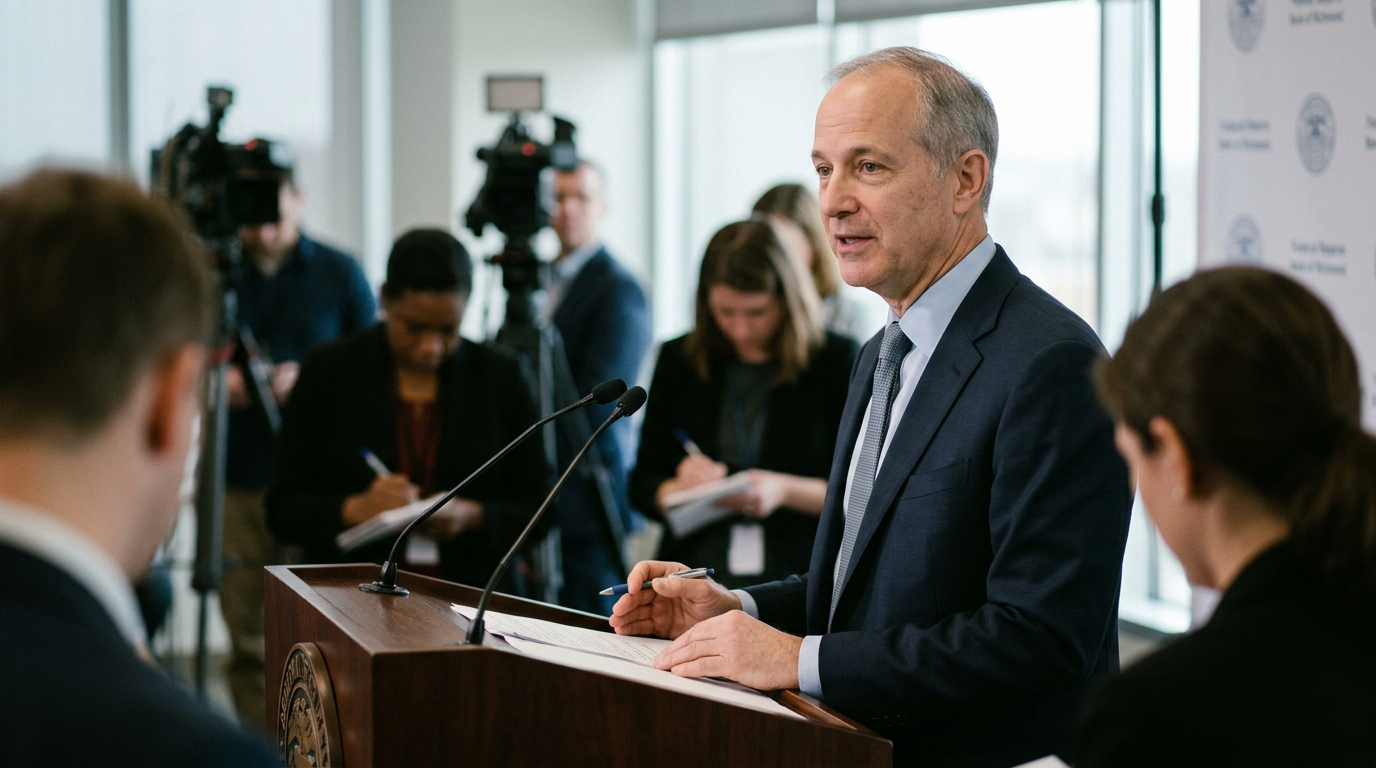
Reporting and photography credited as noted above. Originally published by Bloomberg. The hero image on this page is an AI-generated illustration created by Valor & Ventures Media — not a photograph from the source publication.
Checking your membership…