Donated livers can be made biologically younger
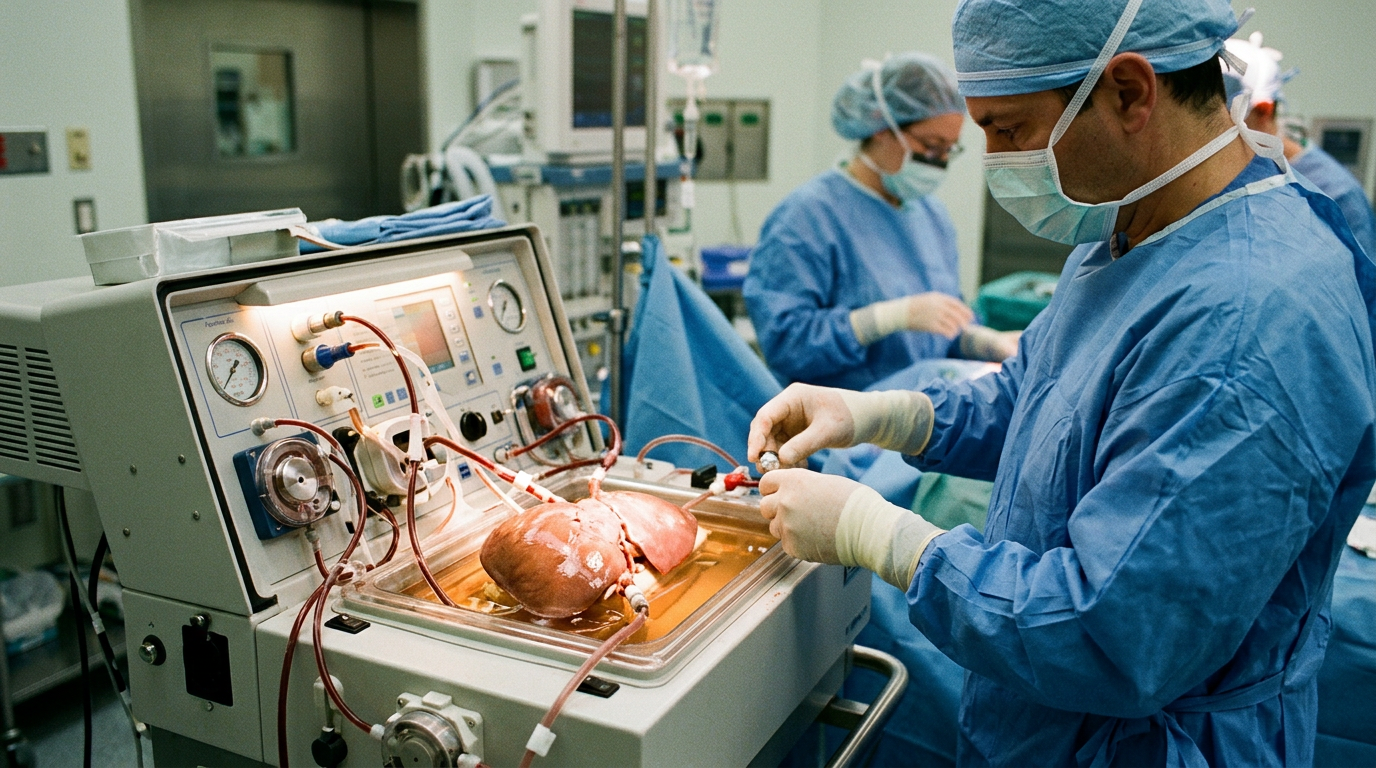
Once an organ is removed from a donor’s body, the clock starts ticking. Surgeons usually flush the organ with a preservative solution, bag it, and put it on ice—where it immediately starts to degrade. The team has a matter of hours to get it into a recipient’s body. There’s another option—one that has been growing…
Rights: fair use excerpt
Executive Summary
A technological shift in organ transplantation is underway as researchers explore ways to biologically rejuvenate donor organs before surgery, according to a report by MIT Technology Review. Traditionally, once an organ is harvested, surgeons use cold storage—flushing the organ with preservatives and placing it on ice—which triggers immediate cellular degradation and leaves doctors with only a narrow window of a few hours to perform the transplant. However, emerging techniques utilizing advanced machine perfusion are allowing scientists to keep organs functioning outside the human body, opening up new possibilities to actively treat, repair, and even reverse the biological age of donor livers.
As reported by the outlet, the traditional cold-preservation phase is being increasingly bypassed in favor of normothermic machine perfusion, a process where the liver is connected to a device that pumps warm, oxygenated blood and nutrients through its vessels. While this preservation method has already improved organ survival rates, researchers are now leveraging it as a dynamic platform for medical intervention. By maintaining the organ in a physiological state, medical teams can deliver targeted therapies directly to the liver. This includes introducing specialized compounds designed to eliminate damaged, non-dividing cells that accumulate with age and promote inflammation, thereby improving the overall health of the tissue.
The ability to biologically rejuvenate these organs could dramatically alter the landscape of transplant medicine. MIT Technology Review notes that older donor livers, which are highly susceptible to damage and frequently discarded under conventional standards, could be rehabilitated to function like much younger organs. By measuring epigenetic markers and metabolic outputs, scientists can track the reduction in the organ's biological age following these machine-delivered treatments. This intervention not only restores function but also holds the potential to vastly expand the pool of available donor organs, offering a lifeline to thousands of patients currently on transplant waiting lists.
For leaders, executives, and innovators in the healthcare and biotechnology sectors, this development highlights the rapid convergence of medical hardware and molecular biology. The transition from passive organ preservation to active bio-rejuvenation represents a paradigm shift in how the medical community approaches aging and tissue longevity. As these technologies move closer to widespread clinical adoption, they present significant opportunities for venture investment, regulatory framework development, and public health policy reform. Civic-minded leaders and founders should monitor these advancements, as they not only promise to solve critical shortages in healthcare infrastructure but also redefine the boundaries of regenerative medicine.
This Executive Summary is an original synthesis by Valor & Ventures Media editors based on public reporting by MIT Technology Review. For the complete original article, please visit the source.
---
Jessica Hamzelou · MIT Technology Review
Reporting and photography credited as noted above. Originally published by MIT Technology Review. The hero image on this page is an AI-generated illustration created by Valor & Ventures Media — not a photograph from the source publication.
Checking your membership…