Carry Trade Allure Puts Hong Kong Dollar Back on 7.85 Watch
Demand for carry trades is pushing the Hong Kong dollar toward the weak end of its trading band against the greenback.
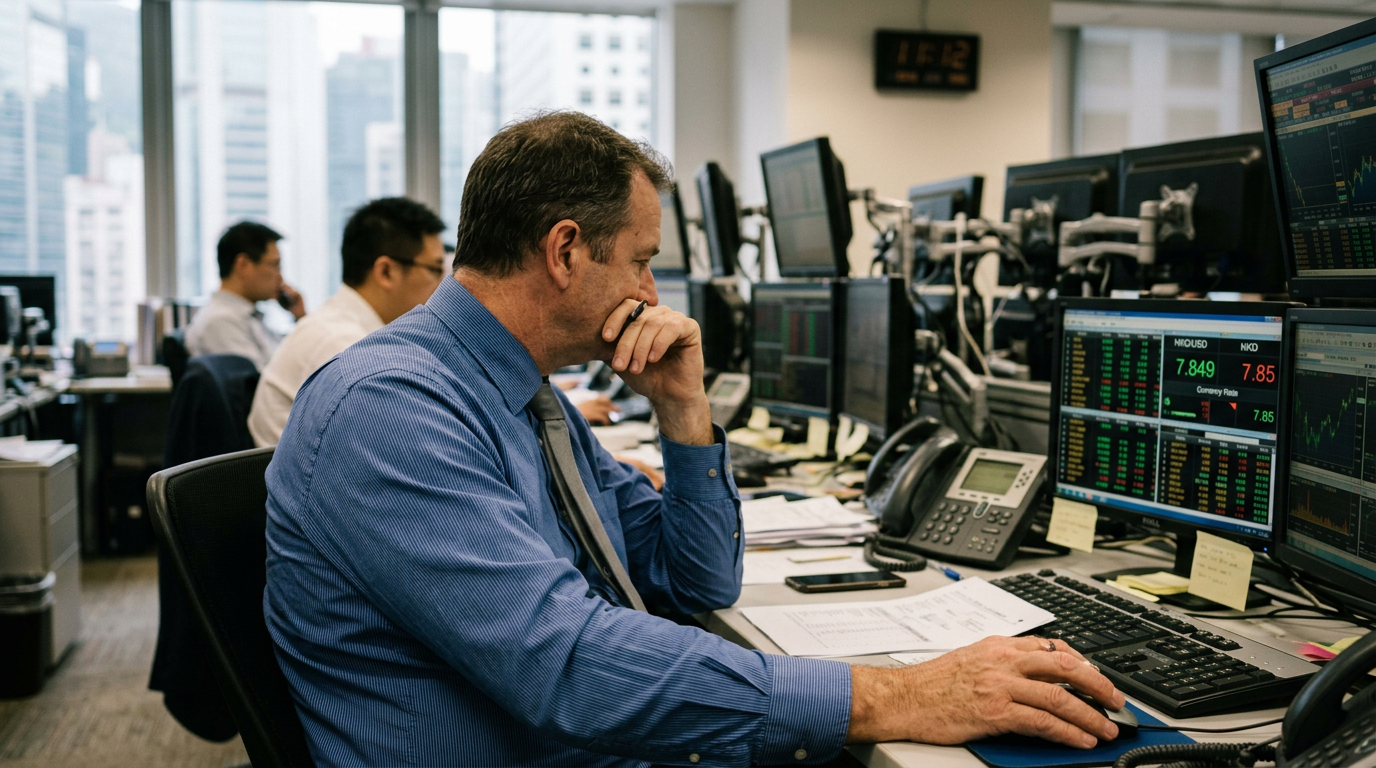
Executive Summary
The local currency of Hong Kong is currently experiencing renewed downward pressure against the United States dollar, drawing closer to the weaker boundary of its long-standing exchange rate corridor. According to a report by Bloomberg, this shift is being propelled by a heightened appetite for carry trades among global market participants. As international investors seek to exploit interest rate differences between the two major financial regions, the local currency is being driven toward the 7.85 level, a critical threshold that represents the weakest boundary of its official trading range.
The underlying mechanism driving this currency movement is the classic carry trade strategy, which has gained significant traction in recent months. In this financial maneuver, market players borrow funds in a currency with lower interest rates—in this case, the territory's dollar—to purchase assets in a higher-yielding currency, specifically the greenback. This continuous selling pressure on the local unit naturally depreciates its value relative to the American dollar, driving the exchange rate toward the weaker limit of the established currency peg system.
To maintain the stability of its monetary system, Hong Kong utilizes a linked exchange rate mechanism that keeps its currency bound between 7.75 and 7.85 per U.S. dollar. When the currency depreciates to the 7.85 boundary, the local monetary authority must step in to defend the peg by purchasing local dollars and selling foreign reserves. This defensive action reduces the regional monetary base and tends to push local borrowing costs higher, illustrating the delicate balance required to manage a pegged currency amid diverging global interest rate policies and fluctuating market demand.
For the executive and entrepreneurial audience of Valor & Ventures Media, these currency dynamics represent more than just technical market fluctuations. Movements toward the weaker boundary of a currency peg can signal impending shifts in regional liquidity, domestic borrowing costs, and investment flows across East Asia. Corporate leaders and founders with international operations must monitor these developments closely, as changes in liquidity and interest rates in a major financial capital like Hong Kong can influence global supply chain financing, corporate treasury management strategies, and overall risk management in a highly interconnected global economic landscape.
This Executive Summary is an original synthesis by Valor & Ventures Media editors based on public reporting by Bloomberg. For the complete original article, please visit the source.
Demand for carry trades is pushing the Hong Kong dollar toward the weak end of its trading band against the greenback.
---
David Finnerty · Bloomberg
Reporting and photography credited as noted above. Originally published by Bloomberg. The hero image on this page is an AI-generated illustration created by Valor & Ventures Media — not a photograph from the source publication.