Why Flood Insurance Is the Cheapest Thing Indiana Isn't Buying
A standard homeowners policy does not cover rising water. In Wayne County and across Indiana, that single gap is the difference between a six-week recovery and a six-year one — and between a town that rebuilds and a town that quietly empties out.
Executive Summary
A widespread misunderstanding about residential property coverage is leaving numerous property owners in Indiana vulnerable to catastrophic financial losses following recent inundations. According to reports from state emergency management and federal disaster agencies, standard residential insurance policies across the state exclude damage from ground-level rising water, covering only top-down or interior pipe occurrences. This coverage gap means that when rivers swell and submerge local communities, many residents are shocked to discover they must fund their own rebuilding efforts. To secure protection against rising waters, property owners must proactively obtain separate coverage through private underwriters or the federal government's flood protection initiative, which carries a mandatory one-month waiting period before taking effect.
The financial disparity between the price of defense and the cost of destruction is stark. The state's emergency management agency notes that for properties situated outside officially designated high-hazard areas, a basic federal flood policy typically costs only a few hundred dollars annually. Conversely, even a minor intrusion of water into a standard-sized residence frequently generates tens of thousands of dollars in remediation costs. While some victims anticipate federal disaster grants to bridge this gap, such aid is rarely guaranteed, often averages only a fraction of actual losses, and typically arrives as low-interest loans that add to existing debt burdens. Critically, the majority of inland inundation incidents in the state occur outside the officially mapped zones where lenders require coverage, leaving many property owners entirely unprotected.
The true economic devastation of these events often materializes months after the initial clean-up efforts fade. When local businesses suffer extensive water damage without insurance, prolonged closures frequently force employees to seek opportunities in larger metropolitan centers, permanently draining the local workforce. This loss of economic activity can lead to vacant commercial districts, diminished household incomes, and subsequent increases in property crime. Furthermore, delayed health hazards such as mold proliferation and compromised water systems present ongoing challenges for local populations, while corporate site selectors routinely bypass areas that demonstrate repetitive flooding risks without robust local mitigation strategies.
Mitigating these compounding crises requires a combination of individual preparation and rapid institutional response. Experts recommend that property owners secure flood policies well ahead of wet seasons, elevate critical mechanical equipment, and support government buyouts of chronically affected properties. Additionally, streamlining public funding to ensure that recovery capital reaches affected business districts within weeks rather than months is crucial to preserving the local tax base. While grass-roots community members and local volunteer organizations frequently lead the immediate rescue and cleanup efforts, systemic financial readiness remains the most dependable tool for long-term community survival.
For business executives, civic leaders, and entrepreneurial founders, the lessons of these Midwestern flooding events highlight the vital connection between risk management and community resilience. Business continuity depends not only on internal operations but also on the stability of the local infrastructure and the financial security of the regional workforce. Leaders must evaluate their geographic footprints, ensure that their physical assets are comprehensively protected against water hazards, and advocate for localized mitigation plans. By understanding the true economics of disaster recovery and planning proactively, organizations can safeguard both their investments and the communities they anchor.
This Executive Summary is an original synthesis by Valor & Ventures Media editors based on public reporting by VVM Editorial / FEMA / NFIP / Indiana DHS. For the complete original article, please visit the source.
Water leaves. The invoice stays.
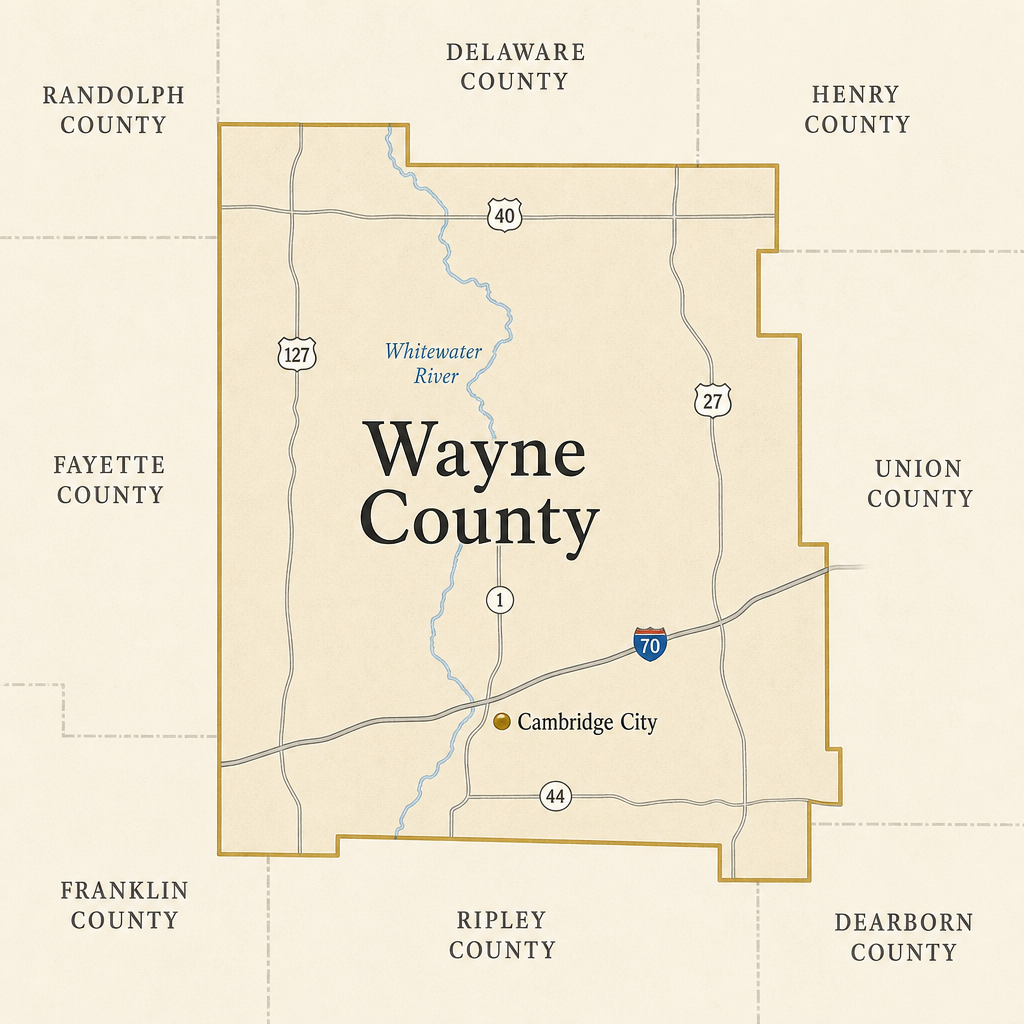
In the days after floodwater pushed through Cambridge City and the small towns strung along the Whitewater, the arithmetic of recovery starts to show itself. Drywall comes out by the pickup load. Furnaces, water heaters and well pumps are scrapped. Small business owners stand in a wet stockroom and do the math on inventory that is not coming back. And then someone from the insurance company says the sentence that reorders a family's next five years: rising water is not covered.
That is not a loophole. It is how the market works. A standard homeowners policy in Indiana covers wind, fire, a burst pipe — water that arrives from above or from inside the walls. Water that arrives from outside, across the ground, is written out. Coverage for that comes separately, through the National Flood Insurance Program or a private flood carrier, and it takes 30 days to take effect. You cannot buy it while the river is up.
What it costs versus what it saves
Outside the mapped high-risk floodplain, an NFIP Preferred Risk policy for a typical Indiana home often runs in the low hundreds of dollars a year. A few inches of water in a 1,500-square-foot house routinely produces $25,000 to $30,000 in damage. Federal disaster assistance, when a declaration comes at all, is not insurance: individual grants average a fraction of that, and the rest arrives as a loan a working family has to repay on top of an existing mortgage.
This is the part worth sitting with. Most inland flood damage in Indiana happens outside the mapped high-risk zones — the places where nobody was required to buy coverage and nobody suggested they should.
My thoughts on what comes next
Having watched communities absorb this kind of hit, the danger is rarely the week of the flood. It is month nine.
Recovery is slow, so businesses come back slow. A restaurant or machine shop that is dark for four months does not simply reopen — its people take other jobs in Richmond or Indianapolis and do not come back. Payroll leaves the county before the buildings are even dry.
Jobs go, and pressure follows. Idle work, thin wallets and vacant structures are the standing conditions for property crime and worse. That is not a moral failure of a town; it is what happens when income disappears faster than help arrives.
Health risk lags the headlines. Mold in closed-up houses, compromised private wells, sewage backups and standing water are a respiratory and gastrointestinal problem that peaks weeks after the cameras leave.
And industry has a long memory. Manufacturers and distributors underwrite location risk. A county that floods twice without a visible mitigation plan quietly moves down the site-selection list, and that decision is never announced.
The fix is unglamorous and it is available: buy the policy before the season, elevate mechanicals above the base flood elevation, take the buyout where a structure keeps flooding, and push local and state government to move money in weeks rather than quarters. Speed of capital is the whole game. Every month a Main Street stays boarded is a month of tax base that does not return.
Where to get help in Indiana
Indiana 211 — dial 211 or 866-211-9966. Statewide clearinghouse for shelter, food, cleanup crews and case management.
American Red Cross Indiana — 1-800-RED-CROSS (1-800-733-2767). Emergency lodging, meals, cleanup kits.
FEMA Helpline — 1-800-621-3362. Registration and status for individual assistance where a federal declaration applies.
NFIP Flood Insurance — 1-877-336-2627. Policy questions, claims, and finding an agent who writes flood in your county.
Disaster Distress Helpline — call or text 1-800-985-5990. Free, confidential, 24/7 crisis counseling.
Indiana Attorney General Consumer Protection — 1-800-382-5516. Report post-disaster contractor fraud before you sign anything.
SBA Disaster Assistance — 1-800-659-2955. Low-interest recovery loans for businesses, nonprofits and homeowners.
The people who make the difference
Every one of these events also makes local heroes, and Wayne County has them. Bradley Wood — a businessman, farmer and digital nomad, not a firefighter, whatever the boots suggested — has been in the water and in the mud because that is what commitment to a community looks like. The churches that opened basements, ran supply lines and organized volunteer crews did the coordination work that agencies took days to stand up.
This effort stretches across the state. To everyone hauling out drywall tonight: you are in Valor & Ventures Media's thoughts and prayers.
Reporting and photography credited as noted above. Originally published by VVM Editorial / FEMA / NFIP / Indiana DHS.