Longsys Founder Bets Big on R&D to Ride AI Memory Wave
Longsys Electronics Founder Cai Huabo says 78% of proceeds will go into research and development as the company shifts from a module house to a semiconductor memory brand. With expansion plans in Brazil, Europe, and the US, Longsys aims to break the industry’s price‑driven cycle and position itself at the forefront of AI‑era innovation. (Source: Bloomberg)
Executive Summary
In a major strategic realignment aimed at capturing the momentum of the artificial intelligence revolution, electronics firm Longsys is embarking on a comprehensive corporate transformation. According to a Bloomberg report, the company's founder, Cai Huabo, has revealed plans to transition the organization away from functioning as a standard memory module house and toward becoming a dedicated semiconductor memory brand. This pivot represents a fundamental shift in the company's identity and operational focus, positioning it to compete directly in the high-stakes arena of advanced computing hardware.
To fund this ambitious transition, the organization is committing the vast majority of its financial resources to technological innovation. The outlet reports that Cai Huabo intends to direct 78 percent of the company's proceeds into research and development. This massive capital allocation underscores the firm's belief that proprietary engineering and design capabilities are essential to survival in a rapidly changing market, moving the business beyond simple assembly work and into the creation of high-value intellectual property.
Beyond technological development, the company is also looking to expand its global reach and market presence. According to Bloomberg, Longsys is actively planning geographical expansions into Brazil, Europe, and the United States. This international push is designed to place the firm in closer proximity to key global clients and tech ecosystems, enabling it to better serve the growing demand for specialized memory solutions required by modern enterprise architectures and complex AI networks.
Ultimately, these combined efforts are aimed at insulating the business from the chronic volatility of the hardware market. The report notes that the company seeks to shatter the sector's historical cycle of price-based competition by establishing itself as a premium brand. By focusing on high-performance memory rather than commoditized components, the leadership hopes to build a more resilient and sustainable business model that can withstand broader macroeconomic shifts and position the firm at the forefront of new technological advancements.
For the founders, defense sector veterans, and corporate executives within the Valor & Ventures audience, this transition offers a compelling case study in strategic adaptation. It demonstrates how mid-sized hardware entities must aggressively invest in internal research to avoid being left behind by the rapid advancement of artificial intelligence infrastructure. As global leaders seek to secure robust supply chains and navigate the shifting landscape of international technology trade, the movement of key firms into Western markets like the US and Europe will remain a critical trend to monitor.
This Executive Summary is an original synthesis by Valor & Ventures Media editors based on public reporting by Bloomberg. For the complete original article, please visit the source.
Longsys Electronics Founder Cai Huabo says 78% of proceeds will go into research and development as the company shifts from a module house to a semiconductor memory brand. With expansion plans in Brazil, Europe, and the US, Longsys aims to break the industry’s price‑driven cycle and position itself at the forefront of AI‑era innovation. (Source: Bloomberg)
---
Bloomberg
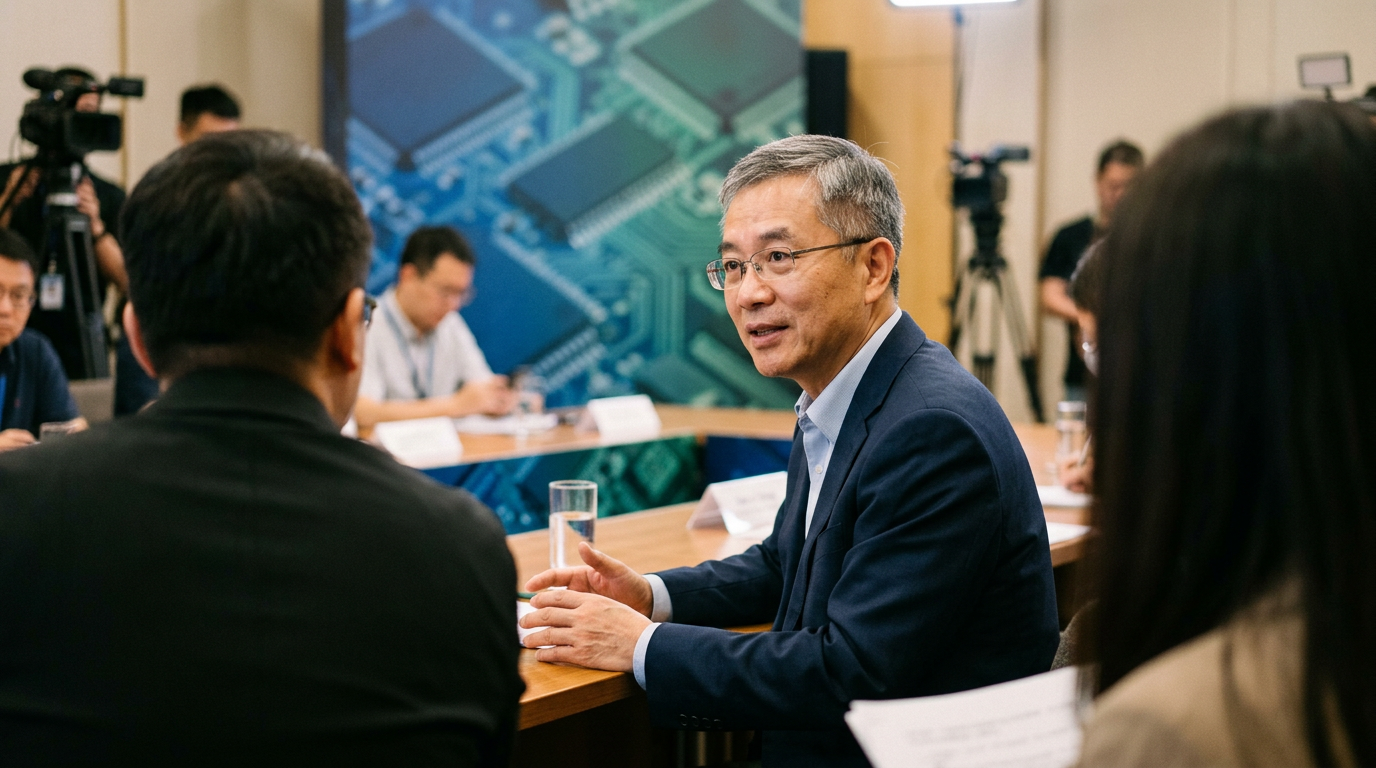
Reporting and photography credited as noted above. Originally published by Bloomberg. The hero image on this page is an AI-generated illustration created by Valor & Ventures Media — not a photograph from the source publication.
Checking your membership…