Cambridge City Digs Out: What Comes After the Water Goes Down
Nearly 250 homes damaged, a town hall knocked offline, and a recovery measured in years — plus why flood insurance, church basements and neighbors like Bradley Wood may decide how fast Wayne County comes back.
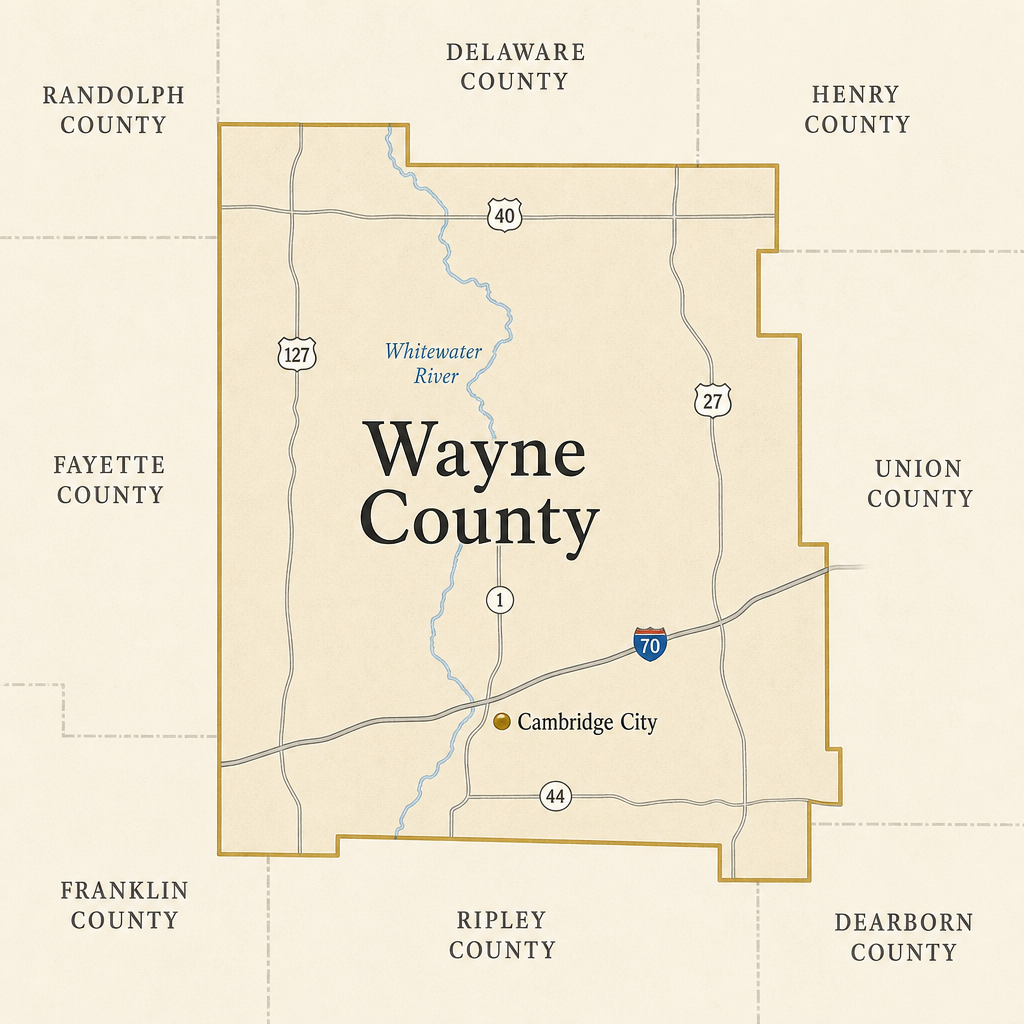
Executive Summary
Historic Aug. 11-12 flooding damaged nearly 250 homes in Cambridge City, Indiana, and knocked the town hall offline. Recovery risks — business failure, job loss, crime, disease and industry flight — argue for flood insurance, fast local aid and the volunteer networks already carrying the load.
This Executive Summary is an original synthesis by Valor & Ventures Media editors based on public reporting by WISH-TV / Western Wayne News / Palladium-Item / Indiana DHS. For the complete original article, please visit the source.
CAMBRIDGE CITY, Ind. — A week after the Aug. 11-12 storm system swept from Illinois into Indiana and dropped six to nine inches of rain across parts of the state, this Wayne County town of roughly 1,800 is still hauling its life to the curb.
Town Council President Jim McLane told residents packed into the Lincoln Middle/High School bleachers on Aug. 16 that 174 homes had sustained major damage, 71 more had minor damage, and four buildings were declared destroyed. The town hall itself is unusable. Phones went down. Municipal operations were run out of borrowed rooms. Officials expect those damage numbers to rise as assessments continue.
Dumpsters now sit at 152 S. Green St., open daily from 9 a.m. to 4 p.m., with debris separated into six categories: household trash, vegetative debris, construction and demolition material, appliances, electronics and household hazardous waste. Residents like Walter Hickman have made five trips in a morning. Tina Pitcher is gutting the house her grandparents raised her father in. That is what recovery looks like in week one — pickup beds and wheelbarrows, not press conferences.
EDITOR'S NOTE — WHAT COMES NEXT, AND WHY IT MATTERS
Here is the part that rarely makes the evening broadcast. The flood is the event. The aftermath is the story.
Recovery is slow, and slow recovery has a bill attached. Main Street businesses that lose inventory, equipment and 60 days of revenue do not simply reopen; a meaningful share never do. When the shop does not reopen, the paycheck does not resume. Unemployment in a small county town is not a statistic — it is the difference between a mortgage and a mold-filled asset.
Idle hands and empty buildings invite trouble. Communities that stay displaced and underemployed after a disaster consistently see upticks in property crime, theft from gutted homes, scam contractors and, in the worst cases, violent crime. Vacant structures are targets. So are grieving people with insurance checks and no one advising them.
Standing water and saturated drywall are a public health problem, not a cosmetic one. Mold, contaminated well water, sewage backflow, tetanus risk from debris handling and mosquito breeding all follow floodwater. The Wayne County Health Department is already offering vaccines and well-water testing. Use them. That is not overcaution; that is how you keep a cleanup from becoming an outbreak.
Industry moves when infrastructure does not come back fast. Employers weigh flood risk, insurance costs and reliability of utilities. If a town takes three years to restore confidence, the plant, the distributor or the clinic quietly relocates — and the tax base leaves with it.
ON FLOOD INSURANCE: BUY IT BEFORE YOU NEED IT
Say it plainly: standard homeowners insurance does not cover flood. It never has. Most of the families now stacking ruined furniture on the curb are uninsured for exactly the loss they suffered, and federal or state individual-assistance grants are not designed to make a family whole — they are designed to keep a roof over your head while you figure out the rest.
Flood insurance through the NFIP or a private carrier is one of the few products in American life that reliably returns more than it costs when the water comes. There is a 30-day waiting period on most new policies, which means the only time to buy it is when you do not need it. If you live anywhere near the Whitewater, the Wabash, the White or any creek that has ever left its banks, price a policy this week. Renters can buy contents coverage. Business owners can insure inventory and business interruption. Do it.
WHERE TO GET HELP — INDIANA NUMBERS THAT WORK
Call 2-1-1 (or 866-211-9966) to report flood damage and be connected to housing, food, cleanup and case-management resources. Reporting damage matters even if you need nothing today: those reports drive the disaster declarations that unlock funding for your neighbors.
Complete the Indiana DHS damage reporting tool and the Wayne County Emergency Management Agency survey. Indiana's August 2026 disaster hub at in.gov/dhs carries State Disaster Relief Fund (SDRF) application details for damaged primary residences under E.O. 26-21.
Businesses should file the Wayne County Area Chamber of Commerce Business Impact Survey; it feeds advocacy for SBA disaster loans and Economic Injury Disaster Loans if declarations are issued (sba.gov/disaster).
American Red Cross Indiana: 1-800-RED-CROSS (1-800-733-2767) for shelter, meals and recovery casework. FEMA Helpline: 1-800-621-3362 if and when a federal declaration is issued. National Flood Insurance Program: 1-877-336-2627. Disaster Distress Helpline (24/7 counseling): 1-800-985-5990. Indiana Attorney General consumer protection, for contractor fraud after a disaster: 1-800-382-5516.
Cambridge City Christian Church, 106 W. Church St., is collecting gallon water containers, rubber boots, totes, fans, bug spray and vinegar. Free laundry, showers and insurance assistance are being coordinated locally.
THE HEROES THIS MAKES
Disasters do not only take. They reveal.
Bradley Wood has been out in the mud running recovery operations as a private citizen. People assumed he was a firefighter. He is not. He is a local businessman, a farmer and a digital nomad who simply refused to watch his neighbors carry it alone. Wayne County has a dozen more like him working chainsaws and sump pumps without a badge or a paycheck.
The churches deserve their own line. Congregations across Cambridge City and western Wayne County organized donation intake, meal service, volunteer scheduling and mucking crews faster than any agency could have. That is not a knock on government — it is a reminder that the fastest responder in America is usually the person four houses down and the church basement that opens its doors.
This effort stretches across the state, from the derecho damage in northwest Indiana to the flooded river towns in the east. Every one of those communities is on a marathon, not a sprint — the words Wayne County EMA Director Matthew Cain used, and the right ones.
To Cambridge City and every Hoosier town still pumping out a basement tonight: you are in Valor & Ventures Media's thoughts and prayers. Report your damage. Call 211. Buy the flood policy. And find your Bradley Wood — or be him.
SOURCES & HELP RESOURCES
The numbers, links and local contacts referenced in this summary:
Indiana 211 — Report damage and request recovery resources: dial 211 or 866-211-9966
Indiana Department of Homeland Security August 2026 disaster hub: in.gov/dhs
State Disaster Relief Fund (SDRF) details under E.O. 26-21: in.gov/dhs
Wayne County Emergency Management Agency damage survey: waynecountyema.org
Wayne County Area Chamber of Commerce Business Impact Survey: waynecountychamber.com
Small Business Administration disaster loans: sba.gov/disaster
American Red Cross Indiana: 1-800-RED-CROSS (1-800-733-2767)
FEMA Helpline: 1-800-621-3362
National Flood Insurance Program: 1-877-336-2627
Disaster Distress Helpline (24/7): 1-800-985-5990
Indiana Attorney General consumer protection / disaster fraud: 1-800-382-5516
Cambridge City Christian Church donation and relief hub: 106 W. Church St., Cambridge City, Ind.
Reporting and photography credited as noted above. Originally published by WISH-TV / Western Wayne News / Palladium-Item / Indiana DHS.