How solid-state transformers could help power the AI boom
Transformers are a crucial but nearly invisible part of our grid. The devices help efficiently move power across long distances, but they’re complicated and in short supply. And given that their basic design hasn’t changed much for about a century, they could use an upgrade. As the world races to meet rising electricity demand from…
Rights: fair use excerpt
No AI assistance disclosed
Executive Summary
Surging power consumption driven by the rapid expansion of artificial intelligence is placing unprecedented demands on electrical infrastructure, bringing renewed scrutiny to core components that have historically operated out of public view. According to reporting from MIT Technology Review, solid-state transformers are increasingly viewed as a promising technological modernization to help satisfy these mounting utility requirements. While standard transformers remain indispensable for moving electricity efficiently across extensive distances, the physical systems supporting national and regional grids are confronting severe operational constraints.
The fundamental engineering behind standard grid transformers has remained largely the same for approximately a century, the outlet reports. Although these legacy mechanisms have served as the backbone of high-voltage transmission for generations, they are inherently complex to construct and are currently experiencing notable supply shortages. With the global race to expand computational capacity intensifying, the mismatch between aging transformer designs and accelerating power consumption is creating structural friction for utility providers and digital infrastructure operators alike.
Because these critical units are both difficult to produce and in increasingly short supply, existing procurement bottlenecks threaten to delay broader technological initiatives. As MIT Technology Review points out, addressing this imbalance requires an overhaul of foundational equipment that has seen minimal mechanical evolution over the past hundred years. Solid-state alternatives offer an avenue for modernization, providing an updated approach capable of supporting the evolving dynamics of electrical distribution as power needs continue to climb.
For business executives, civic leaders, and technology founders, the stability of the power grid is rapidly becoming a decisive operational variable rather than a passive utility assumption. Scaling next-generation enterprise ventures and digital infrastructure depends directly on resilient, adaptable energy systems that can withstand intensifying resource requirements. As organizations plan capital investments and evaluate strategic risks, monitoring advancements in fundamental electrical hardware will be essential for leaders focused on national infrastructure security, supply continuity, and long-term technological competitiveness.
This Executive Summary is an original synthesis by Valor & Ventures Media editors based on public reporting by MIT Technology Review. For the complete original article, please visit the source.
Transformers are a crucial but nearly invisible part of our grid. The devices help efficiently move power across long distances, but they’re complicated and in short supply. And given that their basic design hasn’t changed much for about a century, they could use an upgrade. As the world races to meet rising electricity demand from…
— MIT Technology Review
Read the full report: https://www.technologyreview.com/2026/10/27/1147684/solid-state-transformers/
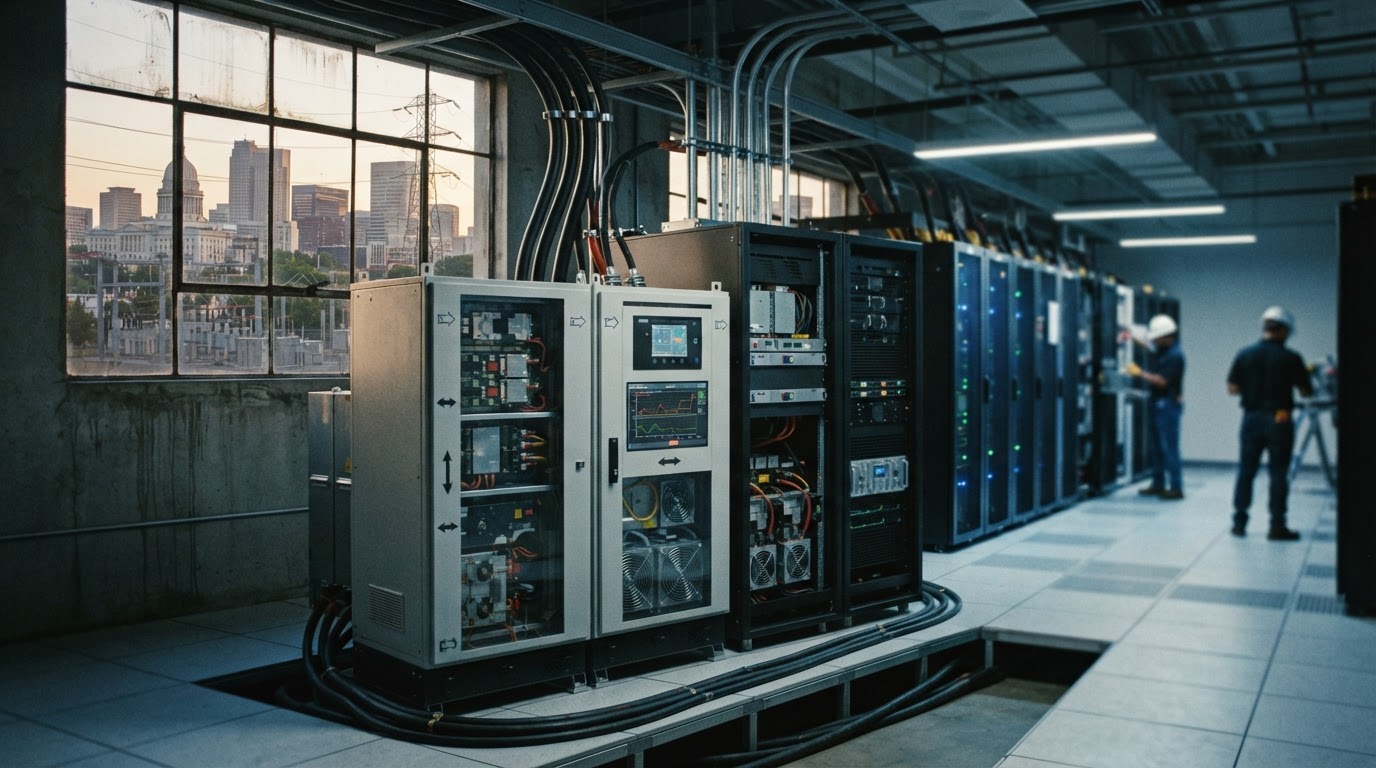
Reporting and photography credited as noted above. Originally published by MIT Technology Review. The hero image on this page is an AI-generated illustration created by Valor & Ventures Media — not a photograph from the source publication.
Checking your membership…