Space Force wants to embed more guardians into the joint force
The new Chief of Space Operations says the wider military “must have enough guardians in key positions to achieve space superiority and drive combat success.”
Rights: fair use excerpt
No AI assistance disclosed
Executive Summary
The United States Space Force is actively working to distribute its specialized service members deeper throughout the broader defense establishment, according to coverage from Task & Purpose. The orbital branch's senior-most uniformed officer emphasized that the wider armed services require a sufficient presence of dedicated space personnel across crucial command postings. According to the news account, leadership views this cross-functional staffing as a foundational requirement to secure tactical advantage above the atmosphere while propelling operational achievement across modern armed conflicts.
This organizational push highlights an evolving doctrine centered on seamless cross-branch coordination. Since its establishment, the newest branch of the military has faced the dual challenge of defining its distinct institutional identity while ensuring that terrestrial forces—spanning ground, maritime, and air components—remain tethered to space-based assets. Orbiting platforms now underpin vital combat functionalities, including secure satellite communications, precision strike timing, intelligence reconnaissance, and ballistic threat alerts. Consequently, leadership argues that orbital competence cannot remain cordoned off from everyday battle management and strategic planning.
Integrating orbital specialists into joint headquarters is intended to resolve coordination bottlenecks that frequently emerge between distinct operational spheres. By placing experienced technical personnel alongside commanders from sister services, cross-domain planning can occur organically rather than through delayed, external coordination channels. The outlet notes that leadership considers positioning space professionals into these essential operational billets vital for preserving multi-domain agility, particularly as competitive global actors expand their own counter-space and orbital disruption initiatives.
Beyond immediate operational concerns, the emphasis on distributed staffing reflects wider cultural and talent management efforts across the defense sector. Cultivating specialists who can communicate fluidly across different warfare environments requires deliberate career-broadening paths and organizational patience. For the orbital service, ensuring its personnel populate major unified combatant commands helps build shared understanding, institutional trust, and coherent warfighting concepts across the entire national defense enterprise.
For defense contractors, business executives, and veterans within the civilian workforce, this initiative offers meaningful strategic takeaways. The push illustrates that possessing sophisticated hardware and advanced technological tools matters little if an organization lacks the embedded talent necessary to translate those capabilities into real-world outcomes. As commercial industries and military organizations alike grapple with complex matrix structures, the drive to integrate specialized practitioners throughout broader systems underscores the critical value of breaking down functional silos to achieve sustained operational excellence.
This Executive Summary is an original synthesis by Valor & Ventures Media editors based on public reporting by Task & Purpose. For the complete original article, please visit the source.
The new Chief of Space Operations says the wider military “must have enough guardians in key positions to achieve space superiority and drive combat success.”
— Task & Purpose
Read the full report: https://taskandpurpose.com/news/space-force-embed-joint-combat-force/
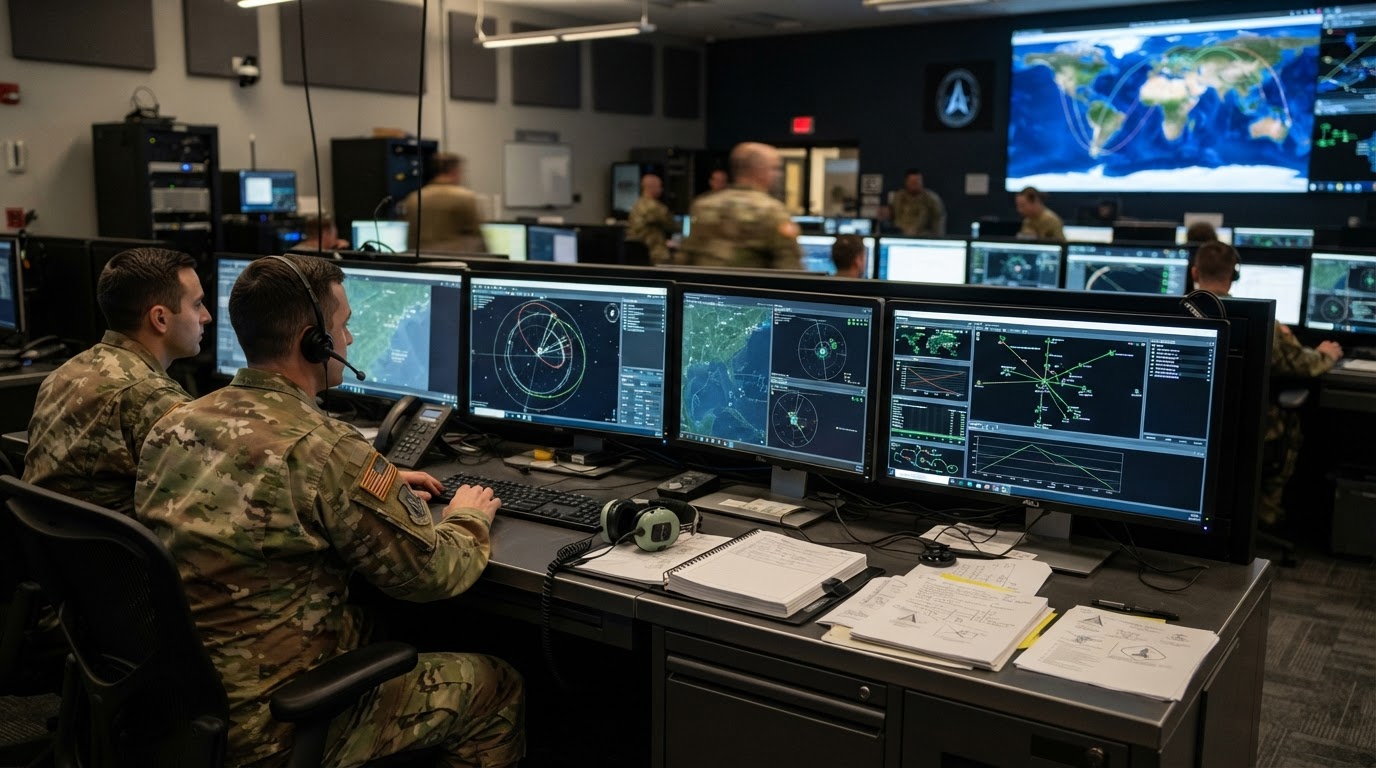
Reporting and photography credited as noted above. Originally published by Task & Purpose. The hero image on this page is an AI-generated illustration created by Valor & Ventures Media — not a photograph from the source publication.
Checking your membership…