Navy Submarine Arrives in Western Australia for Scheduled Maintenance Period
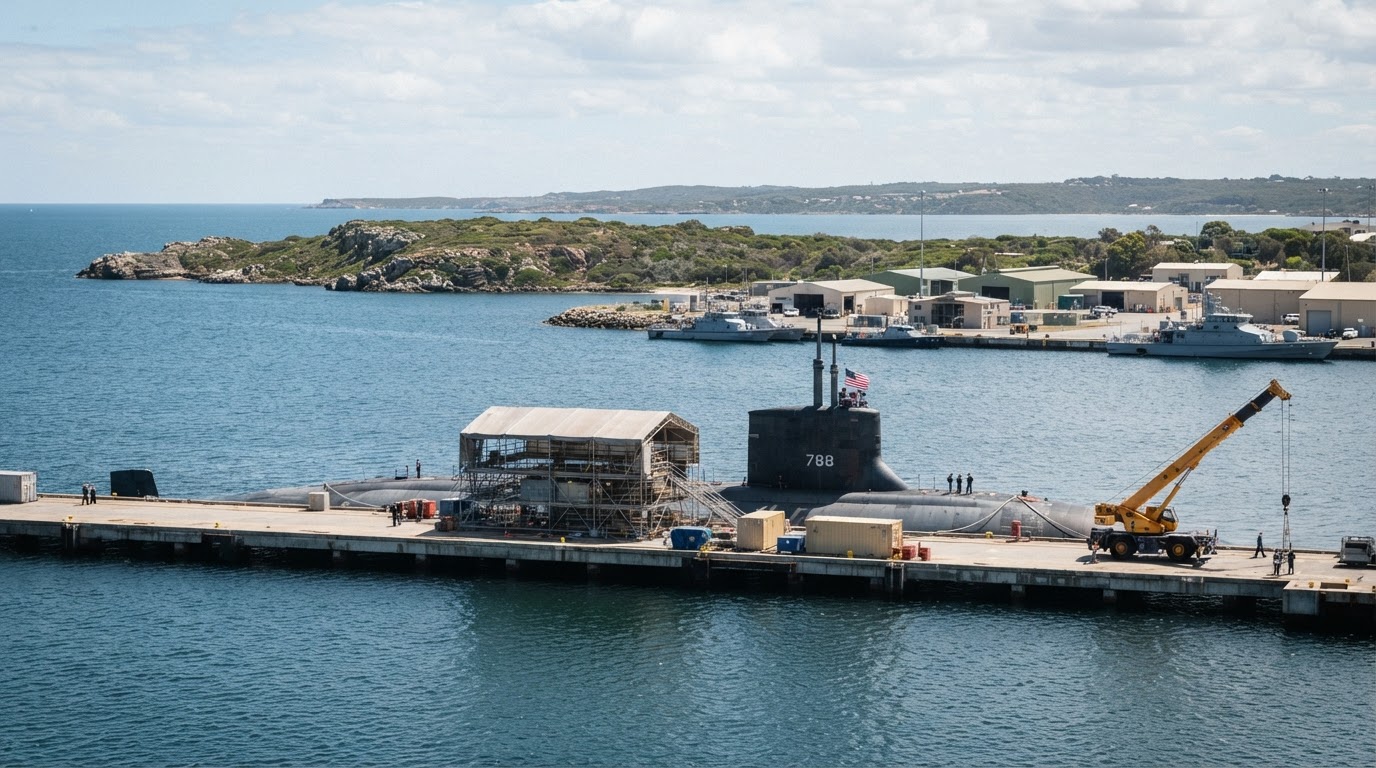
The submarine USS Colorado arrived at HMAS Stirling, Australia, to begin a scheduled, monthlong maintenance period. The visit marks the fourth submarine maintenance period in Western Australia since the establishment of the Australia, U.K., U.S. trilateral security partnership.
Rights: fair use excerpt
No AI assistance disclosed
Executive Summary
An American naval submarine has pulled into port on the western coast of Australia to undertake planned maintenance activities, according to an account published by DoD News. The vessel, identified as the USS Colorado, moored at the naval installation HMAS Stirling to kick off a servicing schedule expected to last approximately one month. This deployment represents the latest practical deployment of undersea assets operating under joint allied coordination in the Pacific and Indian ocean regions.
The defense outlet reports that this stopover represents the fourth time an undersea vessel has conducted a maintenance period within Western Australian facilities since the founding of the tripartite defense pact connecting Australia, the United Kingdom, and the United States. Through these sequential dockings, maritime commanders from the three nations are incrementally operationalizing shared naval capabilities, allowing crews and shore personnel to test procedures for sustaining sophisticated sub-surface vessels far from their home domestic bases.
Reported by personnel tracking trilateral acquisition and integration within the defense establishment, the operation underscores an intensifying focus on allied logistical interoperability. Executing a four-week technical servicing window at an overseas maritime base tests supply pipelines, engineering cooperation, and base support functions. Instead of pulling vessels back to domestic shipyards across the Pacific for routine technical upkeep, using partner facilities demonstrates how shared infrastructure can be leveraged to preserve operational availability.
These recurrent maintenance dockings also highlight how high-level defense agreements are being translated into practical, pier-side actions. Each visit to Stirling provides allied technicians and uniform personnel with direct experience handling the specific requirements of modern submarines. As these maintenance intervals become more normalized, the collaborative framework established between Canberra, London, and Washington continues to transition from conceptual treaty language into observable waterfront execution.
For defense contractors, veteran leaders, and strategic planners, the routine presence of American undersea platforms at allied ports illustrates the evolving reality of forward industrial logistics. Modern defense posture relies heavily on establishing dependable maintenance nodes that can service critical platforms without lengthy transits back to home territory. As multinational defense pacts develop their technical capabilities, executive stakeholders across national security and aerospace sectors will watch these waterfront milestones closely as a gauge of how effectively allied industrial workforces can coordinate complex naval maintenance over the coming decade.
This Executive Summary is an original synthesis by Valor & Ventures Media editors based on public reporting by DoD News. For the complete original article, please visit the source.
---
Rory O’Connor, AUKUS Integration and Acquisition · DoD News
Reporting and photography credited as noted above. Originally published by DoD News. The hero image on this page is an AI-generated illustration created by Valor & Ventures Media — not a photograph from the source publication.
Checking your membership…