Kolkata Stampede Leaves At Least 19 Dead, Dozens Injured
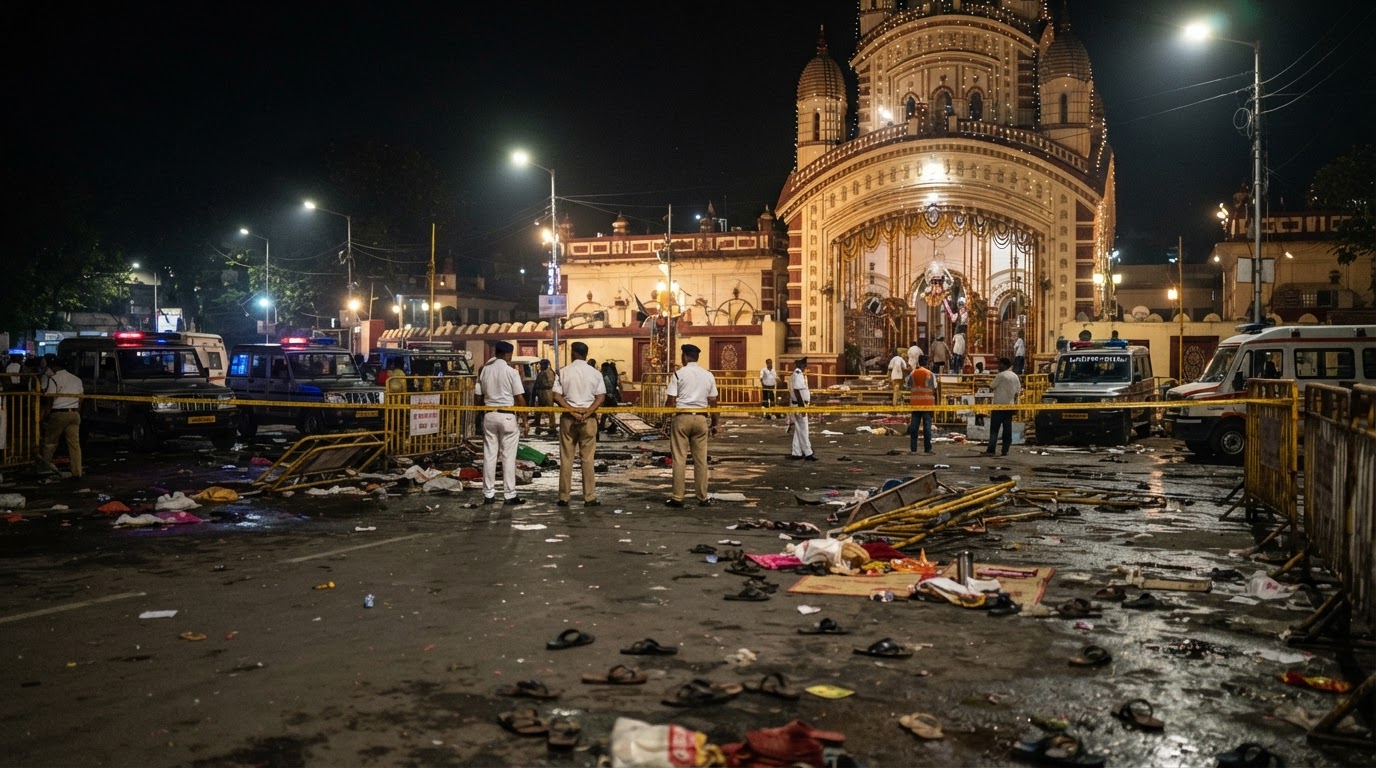
A stampede on Saturday night during the popular Hindu festival in the eastern Indian city of Kolkata has left at least 19 dead and 25 injured.
Rights: fair use excerpt
No AI assistance disclosed
Executive Summary
A deadly surge during a major weekend cultural observance in eastern India has claimed at least 19 lives and injured dozens more, according to Bloomberg. The tragedy occurred on Saturday night in the metropolitan center of Kolkata, where worshippers and visitors had assembled for a prominent Hindu festival. The sudden crush left at least 25 individuals injured alongside the confirmed fatalities, signaling an acute breakdown in movement and safety across the crowded venue.
Mass cultural and religious gatherings frequently bring immense numbers of participants into confined urban environments, placing severe demands on local municipal planning and public security frameworks. While the precise sequence of triggers behind the disaster in Kolkata was not immediately detailed by the outlet, high-volume public events consistently encounter acute structural vulnerabilities. In heavily populated gathering spaces, physical bottlenecks and restricted avenues of movement can transform standard foot traffic into dangerous compressions within moments, leaving little margin for error once crowd momentum begins to overwhelm localized barriers.
Managing such emergencies requires seamless synchronization between civic administrators, law enforcement, and medical personnel operating under intense temporal and physical pressures. In dense metropolitan districts, the immediate priority shifts to establishing clear evacuation corridors, triaging victims, and preventing secondary surges among disoriented attendees. Securing rapid access for ambulances and medical responders in congested zones remains one of the most demanding operational hurdles during sudden-onset mass-casualty events, underscoring the critical need for pre-positioned medical infrastructure and resilient perimeter designs whenever major civic congregations take place.
The lethal incident in Kolkata underscores ongoing civil defense challenges regarding the integration of modern crowd monitoring and physical space management into traditional observances. Urban safety specialists emphasize that preventing crowd-density disasters depends on continuous capacity assessment, proactive choke-point mitigation, and rapid communication channels capable of reaching participants in real time. When civic and security apparatuses fail to detect critical density thresholds early, the structural resilience of an entire venue can rapidly collapse, resulting in the devastating human costs reported by Bloomberg.
For executives, military veterans, and civic leaders within the Valor & Ventures community, this tragedy provides a sobering operational lesson in the paramount value of systemic risk planning and logistical foresight. High-stakes leadership demands an unwavering focus on safety architecture, whether directing complex municipal operations, managing major corporate conferences, or overseeing field personnel in high-density environments. Rigorous contingency protocols, active situational awareness, and the institutional willingness to prioritize crowd safety over operational expediency remain foundational responsibilities for anyone tasked with safeguarding human lives at scale.
This Executive Summary is an original synthesis by Valor & Ventures Media editors based on public reporting by Bloomberg. For the complete original article, please visit the source.
A stampede on Saturday night during the popular Hindu festival in the eastern Indian city of Kolkata has left at least 19 dead and 25 injured.
---
Vikram Kumar · Bloomberg
Reporting and photography credited as noted above. Originally published by Bloomberg. The hero image on this page is an AI-generated illustration created by Valor & Ventures Media — not a photograph from the source publication.
Checking your membership…