Afghanistan’s emerald miners struggle with tools but attract global buyers
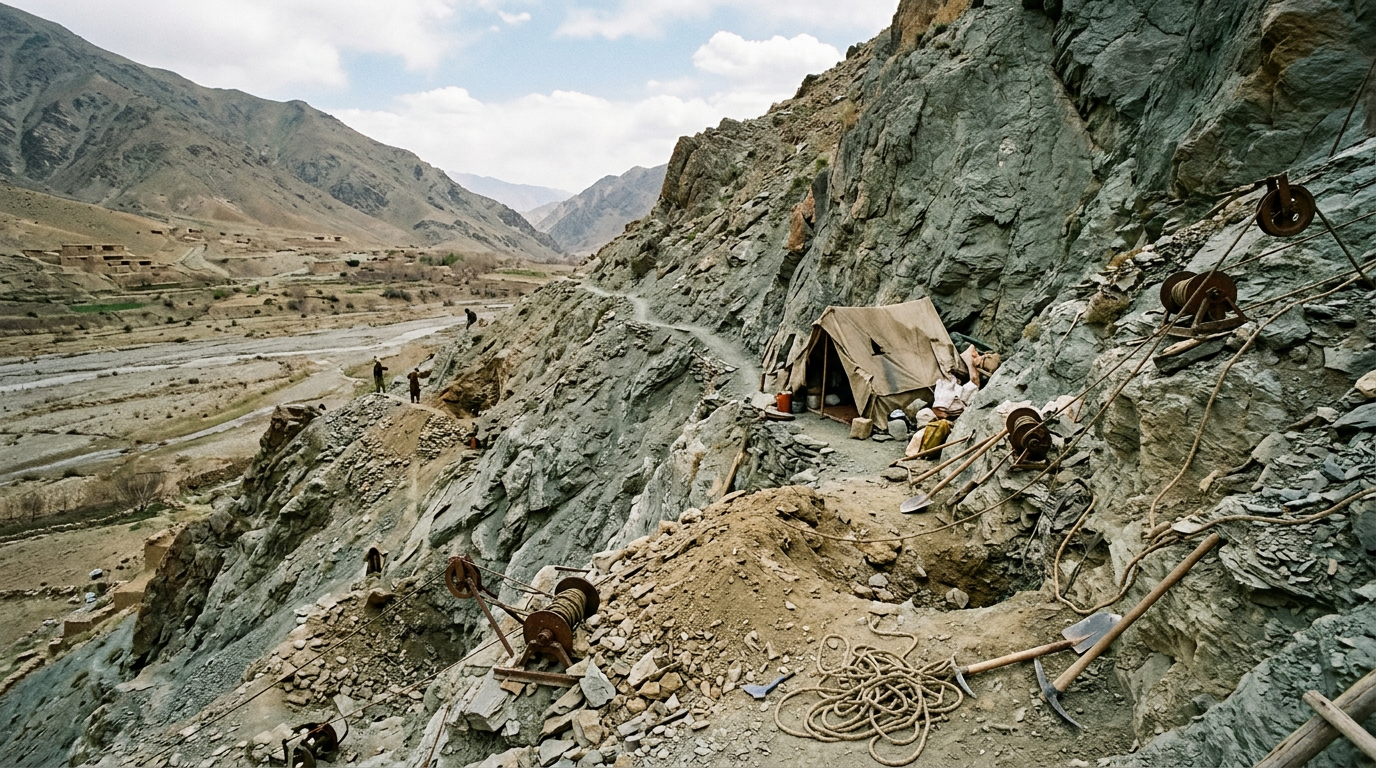
Afghan miners endure harsh conditions, relying on basic tools to extract precious emeralds in Panjshir's steep valleys.
Rights: fair use excerpt
No AI assistance disclosed
Executive Summary
According to a report by Al Jazeera, the emerald mining sector in Afghanistan’s Panjshir Valley continues to draw international interest despite the significant operational hardships faced by local workers. Miners in this rugged, mountainous region are reportedly operating under extremely difficult conditions, utilizing rudimentary equipment to extract high-value gemstones. Despite these technological deficits and geographical barriers, the unique quality of Panjshir emeralds ensures a steady stream of global buyers seeking to secure these precious assets.
The extraction process in the steep valleys of Panjshir remains highly labor-intensive and hazardous. The Al Jazeera report indicates that the local workforce relies primarily on basic hand tools rather than modern industrial mining machinery. This lack of advanced technology not only limits production efficiency but also heightens the physical risks for the laborers navigating the unstable, high-altitude terrain. The stark contrast between these primitive extraction methods and the highly sophisticated global marketplace they feed highlights the fragmented state of the region's mineral economy.
International buyers are reportedly drawn to the region's unique deposits, navigating complex geopolitical landscapes to secure the precious stones. According to the reporting, the allure of these emeralds bypasses regional instability, creating a highly specialized and direct trade route. This persistent global demand serves as a vital economic driver for the local population, despite the lack of formalized trade frameworks or modern financial infrastructure to support the transactions.
For local communities, these mining operations represent one of the few viable avenues for revenue, connecting remote mountainous settlements with international commercial hubs. Because the miners themselves endure harsh conditions and use basic tools, the disparity between their physical labor and the ultimate market value of the gemstones remains vast. This economic disconnect highlights the broader structural challenges facing emerging markets attempting to formalize and modernize their local trade sectors.
For executives, founders, and global trade strategists within the Valor & Ventures Media audience, the situation in Panjshir offers a significant lesson in supply chain dynamics and geopolitical risk. It illustrates the enduring power of scarce natural commodities to transcend severe infrastructural and political barriers. Organizations tracking international trade must continuously evaluate the ethical, regulatory, and logistical complexities of sourcing materials from developing markets against the undeniable consumer demand for specialty goods. Ultimately, the persistence of this trade highlights the complex realities of operating at the intersection of localized labor and global luxury commerce.
This Executive Summary is an original synthesis by Valor & Ventures Media editors based on public reporting by Al Jazeera. For the complete original article, please visit the source.
---
Al Jazeera
Reporting and photography credited as noted above. Originally published by Al Jazeera. The hero image on this page is an AI-generated illustration created by Valor & Ventures Media — not a photograph from the source publication.
Checking your membership…