Army, Allies Prepare for Long-Range Air Assault in Hawaii
Thousands of U.S. and multinational forces are taking part in Joint Pacific Multinational Readiness Center Rotation 27-01 across the Hawaiian Islands.
Rights: fair use excerpt
No AI assistance disclosed
Executive Summary
Several thousand American service personnel alongside international coalition partners have commenced a comprehensive series of island-based training maneuvers throughout the Hawaiian archipelago, according to defense department reporting. The large-scale military gathering is structured around extended-distance aerial insertion drills and coordinated field movements under the operational title of iteration 27-01, conducted through the regional readiness center dedicated to Pacific training. Authored for DoD News by Captain Eric-James Estrada, an officer affiliated with the 25th Infantry Division, the announcement signals an intensive collaborative effort intended to validate combined expeditionary procedures across dispersed island geography.
The primary focus of the operation is preparing ground and aviation contingents to conduct rapid, long-distance aerial assaults across complex island chains. Integrating thousands of multinational troops into synchronized tactical exercises requires addressing significant logistical and navigational challenges unique to oceanic environments. As units move between various islands, the drills place heavy emphasis on maintaining resilient tactical communications, sustaining distributed supply lines, and aligning vertical-lift aviation assets with ground combat teams under realistic field conditions. By deliberately exposing forces to these geographical obstacles, military leaders seek to cultivate the operational agility necessary for moving personnel and heavy equipment effectively across wide maritime expanses.
Beyond individual unit competence, the training rotation serves as a critical testbed for international coalition interoperability and joint-force integration. As defense department dispatches highlight, working side-by-side allows domestic service personnel and foreign allies to smooth out procedural discrepancies, standardize shared communication protocols, and build tactical familiarity long before potential crises emerge. Conducting high-tempo air assault operations within an integrated multinational construct demands exceptional institutional trust and meticulous coordination, reinforcing the Pentagon's long-term strategic priority of deepening defensive partnerships and maintaining a visible, highly capable combined posture throughout the broader Indo-Pacific region.
For military veterans, corporate founders, and civic leaders tracking national defense developments, these archipelago exercises offer valuable takeaways regarding complex program management and crisis readiness. Mobilizing thousands of diverse personnel across wide physical environments underscores the essential value of operational discipline, decentralized decision-making, and adaptable organizational logistics—principles that resonate equally within high-stakes commercial ventures and public-sector initiatives. More broadly, the initiative illustrates the military's ongoing adaptation to the geographic demands of the Pacific theater, emphasizing that enduring operational readiness depends on consistent collaboration, robust communication channels, and shared execution across institutional boundaries.
This Executive Summary is an original synthesis by Valor & Ventures Media editors based on public reporting by DoD News. For the complete original article, please visit the source.
---
Army Capt. Eric-James Estrada, 25th Infantry Division · DoD News
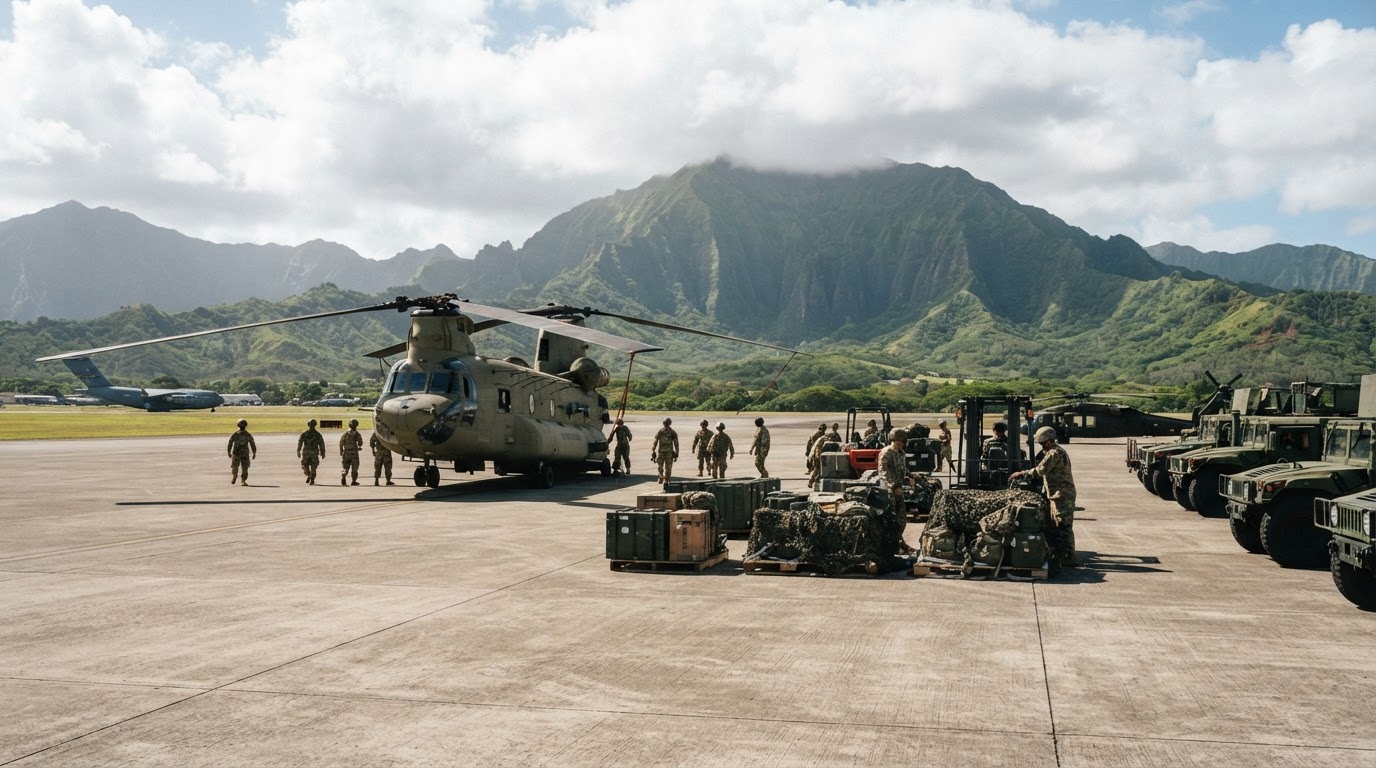
Reporting and photography credited as noted above. Originally published by DoD News. The hero image on this page is an AI-generated illustration created by Valor & Ventures Media — not a photograph from the source publication.
Checking your membership…