Army, Partner Forces Begin Simulated Combat in Hawaii
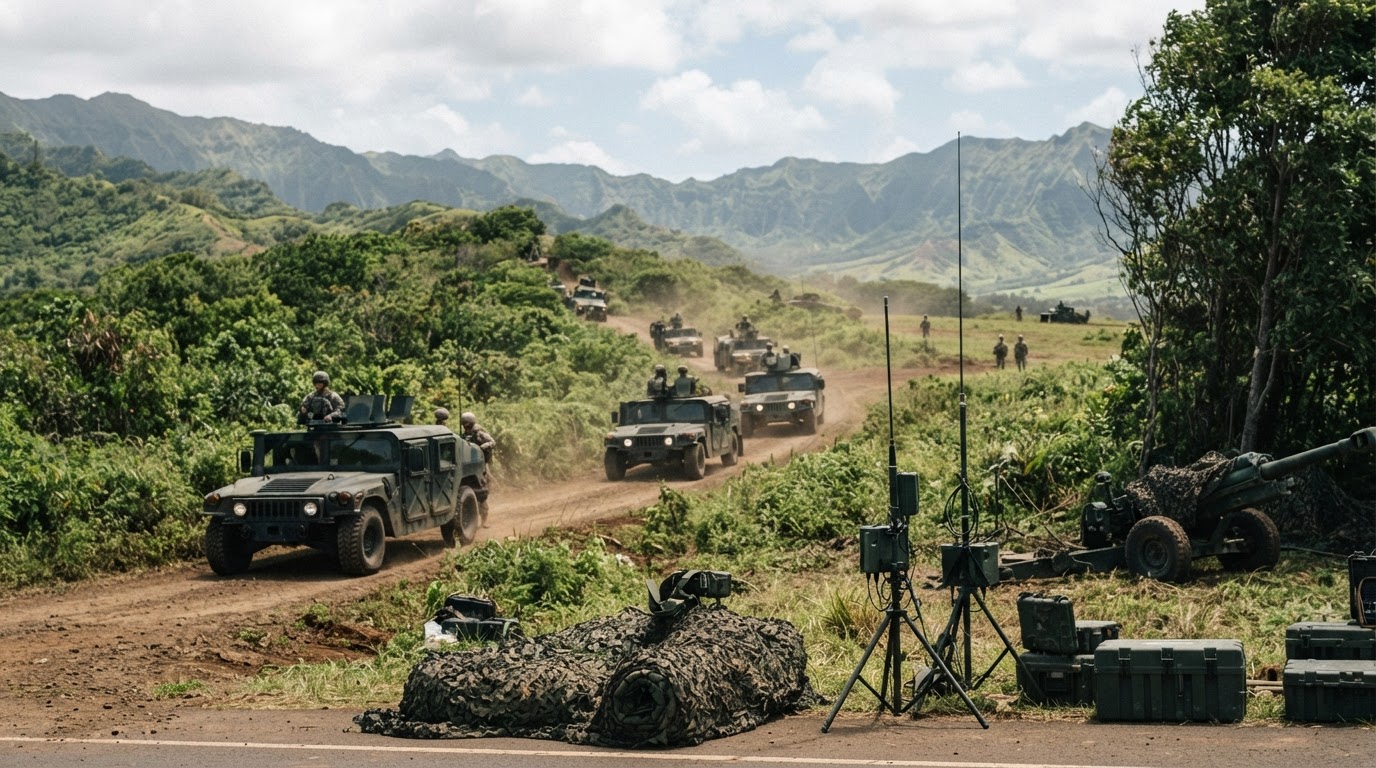
After days of preparation and staging across the Hawaiian archipelago, U.S. Army forces and their multinational partners began training against opposing forces during a Joint Pacific Multinational Readiness Center Rotation.
Rights: fair use excerpt
No AI assistance disclosed
Executive Summary
American soldiers alongside international military partners have officially commenced mock tactical engagements in the Hawaiian islands, according to coverage from DoD News. The transition into active field war games follows an extensive buildup period that spanned several days throughout the island territory. During this preliminary phase, participating formations focused on complex assembly procedures and movement coordination, preparing ground elements and support contingents for direct operational trials across scattered regional environments.
The ongoing drills pit coalition troops against dedicated mock adversaries designed to replicate modern battlefield pressures, writes Army Captain Eric-James Estrada for the defense publication. Organized under the military's Pacific-oriented regional readiness apparatus, the iteration challenges combined forces to maneuver, communicate, and sustain operations in austere terrain. By deploying realistic opposing factions, evaluators can thoroughly assess unit cohesion, tactical decision-making, and frontline adaptability under conditions approximating contested theater environments.
A fundamental aspect of the Hawaii-based event involves managing the severe logistical friction associated with island geography. Dispersing assets across an archipelago tests an army's capacity to stage equipment, position critical supplies, and maintain communication networks across vast maritime distances prior to simulated conflict. The initial staging days were essential in establishing the baseline mobility and shared operational picture required when integrating varied multinational capabilities into a synchronized fighting force.
Interoperability stands at the core of these collaborative exercises, as allied defense teams work to align tactical doctrines, equipment standards, and command structures. Confronting designated opposing elements allows multinational leadership to uncover procedural bottlenecks and refine joint protocols in real time. Rather than operating in isolated silos, participating units must establish shared communication architectures and mutual trust while navigating the logistical and environmental complexities inherent to Pacific island terrain.
For business executives, defense technology innovators, and veteran leaders tracking national security, these training events highlight the ongoing evolution of Western military posture in the Indo-Pacific. The strategic emphasis on island-hopping logistics, distributed command capabilities, and coalition integration signals where future procurement, defense innovation, and alliance-building resources are converging. As geopolitical dynamics demand greater agility across expansive oceanic theaters, the practical insights generated during these Hawaiian maneuvers offer a clear window into how multinational forces intend to project power, maintain deterrence, and manage distributed operations.
This Executive Summary is an original synthesis by Valor & Ventures Media editors based on public reporting by DoD News. For the complete original article, please visit the source.
---
Army Capt. Eric-James Estrada · DoD News
Reporting and photography credited as noted above. Originally published by DoD News. The hero image on this page is an AI-generated illustration created by Valor & Ventures Media — not a photograph from the source publication.
Checking your membership…