Secret votes and vetoes: How will the next UN chief be picked?
With no frontrunner for the job, eight candidates are vying for the UN Security Council's recommendation.
Rights: fair use excerpt
No AI assistance disclosed
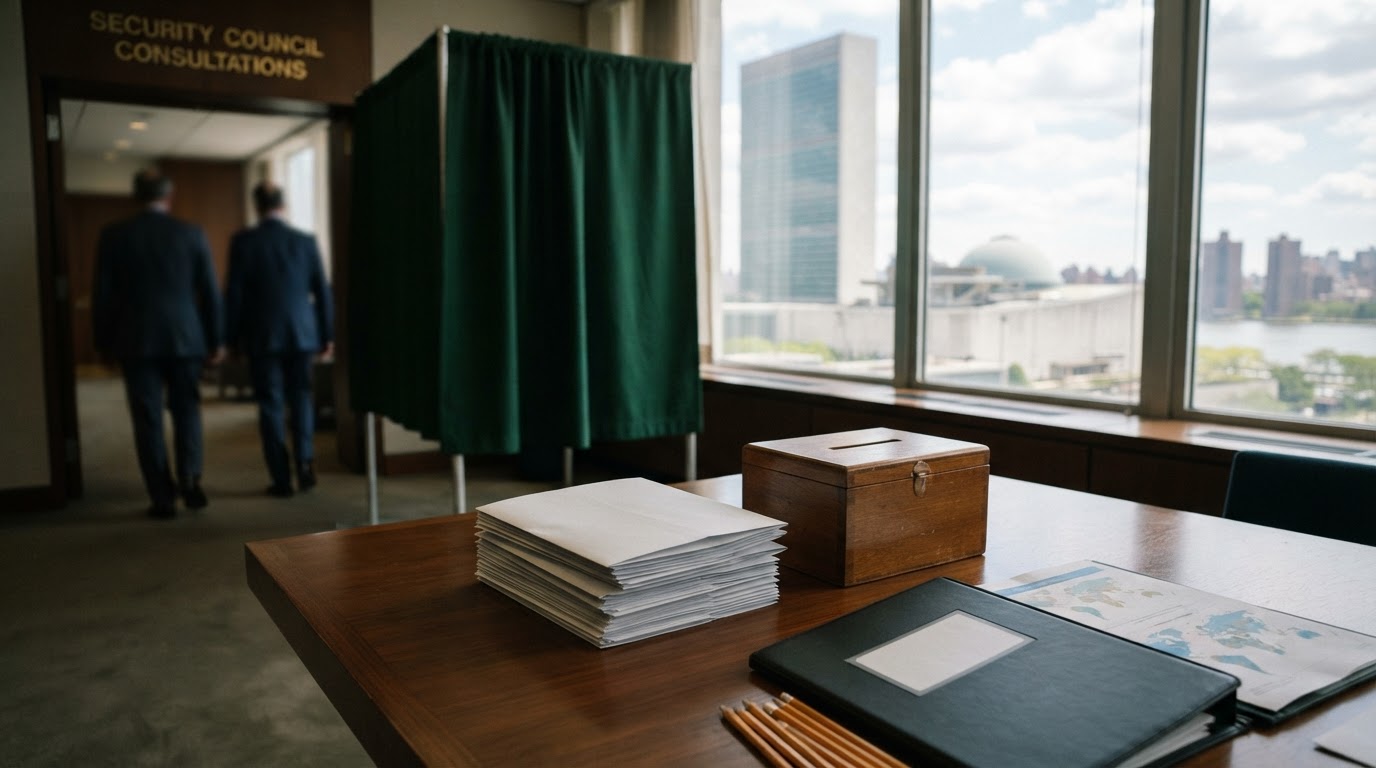
Executive Summary
The competition to select the next United Nations leader is actively taking shape with eight contenders seeking the formal backing of the UN Security Council, according to a report from Al Jazeera. The outlet indicates that the contest currently features no established frontrunner, initiating a critical phase of diplomatic evaluation to determine who will ultimately secure the organization's highest office.
Central to this decision-making process is the procedural framework of the Security Council, which must advance an official recommendation before an appointment can proceed. As the report underscores, this pathway is traditionally defined by confidential voting procedures and the decisive influence of veto authority. Because permanent members of the council possess the ability to unilaterally block any nominee, advancing through the selection stages requires candidates to navigate the intricate geopolitical interests of those key powers.
With eight candidates actively pursuing the position, the absence of a clear leader suggests a prolonged period of strategic assessment and negotiation behind closed doors. The eventual outcome will hinge on an aspirant's capacity to build sufficient consensus across the council's membership while avoiding disqualifying objections from any state wielding veto power. This structural dynamic ensures that success depends as much on avoiding resistance as it does on gathering affirmative support.
The reliance on non-public ballots and veto mechanisms highlights the distinct diplomatic hurdles inherent in high-level multilateral appointments. In an open field, multiple rounds of private polling are frequently utilized to gauge viability, forcing participating nations to weigh each candidate's qualifications against broader global alliances and strategic priorities.
For executives, military leaders, and public-sector decision-makers, the appointment of a global institutional chief holds meaningful implications for international stability and multilateral operations. Observing how executive succession unfolds within an environment governed by consensus and veto thresholds offers vital insights into international governance and high-stakes negotiation. The eventual selection will ultimately direct how the world body approaches cross-border coordination, crisis management, and diplomatic leadership in the years ahead.
This Executive Summary is an original synthesis by Valor & Ventures Media editors based on public reporting by Al Jazeera. For the complete original article, please visit the source.
With no frontrunner for the job, eight candidates are vying for the UN Security Council's recommendation.
---
Edna Mohamed · Al Jazeera
Reporting and photography credited as noted above. Originally published by Al Jazeera. The hero image on this page is an AI-generated illustration created by Valor & Ventures Media — not a photograph from the source publication.
Checking your membership…