Ex-Palantir execs launch Dream with $17M from a16z to build AI world models for construction
Dream is grounded in real physics and construction standards. Just as LLMs learn from text, Dream's world model is trained on more than 100 million square feet of building data gathered from permit archives across the United States.
Rights: fair use excerpt
No AI assistance disclosed
Executive Summary
Former executives from data integration firm Palantir Technologies have officially unveiled Dream, an artificial intelligence startup focused on the construction industry, supported by a $17 million financing round from venture firm Andreessen Horowitz. As reported by Marina Temkin for TechCrunch, the newly established enterprise intends to construct specialized AI world models tailored explicitly to the built environment. The capital infusion highlights sustained institutional interest in directing sophisticated computing paradigms away from purely digital environments and toward historically stubborn, physical-world sectors.
At the core of Dream's technical approach is an effort to model physical environments rather than purely textual ideas. While mainstream generative systems assimilate written prose, Dream is developing an intelligence framework engineered around the laws of physics and established building requirements, according to the outlet. To teach its computational networks the nuances of structural form and compliance standards, the startup has compiled documentation spanning upwards of 100 million square feet of architectural records gathered from municipal permit repositories nationwide. This foundational dataset is intended to reflect the spatial realities and practical constraints of tangible structures.
The venture's lineage reflects an expanding cadre of Palantir alumni who are establishing new technology companies across the commercial landscape. According to the TechCrunch coverage, the venture was initiated by former operators from the data firm, bringing experience with large-scale data systems and operational workflows into the building sector. In targeting construction standards and permit repositories, Dream focuses on an industrial arena long defined by fragmented records, rigorous regulatory oversight, and complex engineering compliance—challenges well suited for veterans of complex enterprise software environments.
For operational executives, technical founders, and civic-minded leaders, the debut of Dream marks an important phase in the maturation of enterprise artificial intelligence. The transition from purely digital text generation toward computational models constrained by physics signals that frontier technology investment is moving deeper into the tangible systems that govern domestic infrastructure. As venture capital firms such as Andreessen Horowitz direct substantial capital into industrial modernization, leadership across both private enterprise and public oversight will be monitoring whether physics-grounded models can effectively navigate the structural realities of physical execution.
This Executive Summary is an original synthesis by Valor & Ventures Media editors based on public reporting by TechCrunch. For the complete original article, please visit the source.
---
Marina Temkin · TechCrunch
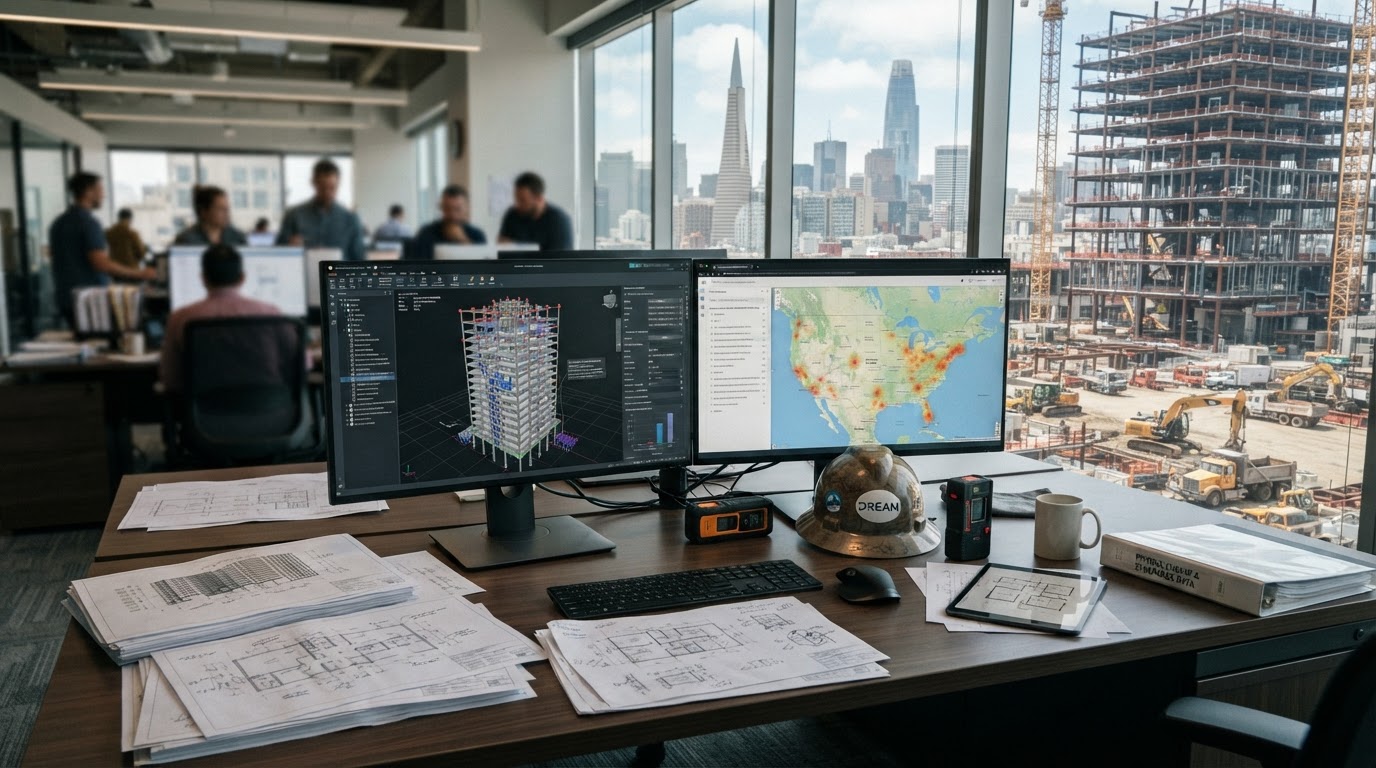
Reporting and photography credited as noted above. Originally published by TechCrunch. The hero image on this page is an AI-generated illustration created by Valor & Ventures Media — not a photograph from the source publication.
Checking your membership…