Sudan war and inflation leave families struggling to survive in Khartoum
Soaring food prices and shrinking incomes force families in Sudan's capital to borrow money and skip meals.
Rights: fair use excerpt
No AI assistance disclosed
Executive Summary
Ongoing armed conflict and escalating inflationary pressures have plunged households across Sudan's capital into acute economic distress, according to reporting from Al Jazeera. In Khartoum, the convergence of protracted violence and a deteriorating macroeconomic climate has systematically undermined urban livelihoods, leaving families caught in a compounding humanitarian and financial emergency. With normal commercial activity severely compromised by the hostilities, the capacity of regular civilians to sustain themselves has reached a critical juncture.
At the center of the domestic crisis is a destructive cycle of rapidly rising food prices alongside widespread declines in household earnings, the outlet reports. As conflict disrupts standard employment, trade flows, and regular access to currency, residents are finding their purchasing power diminished or wiped out entirely. The continuous escalation of staple food costs means that even essential dietary necessities have become increasingly unaffordable for ordinary households. To bridge this widening gap between basic survival needs and accessible income, an increasing number of families have been forced to rely on borrowed money, taking on debt simply to secure daily sustenance.
The severe erosion of financial resources has also driven residents to implement acute rationing measures, including skipping meals, according to the report. These coping mechanisms illustrate the deep physical toll exacted on civilian populations trapped in prolonged conflict zones. When commercial distribution networks falter and rampant inflation takes hold, systemic food insecurity functions as a devastating secondary hazard of war, compounding direct security risks and exhausting the baseline resilience of urban communities.
For executives, defense analysts, and civic leaders tracking international affairs, the situation in Khartoum demonstrates how quickly armed conflict can induce total socioeconomic collapse in major population centers. War rapidly dismantles municipal commerce, drives catastrophic market distortions, and leaves civilian survival dependent on informal debt and extreme deprivation. Understanding these dynamics is essential for leaders evaluating broader regional stability, supply chain vulnerability, and the operational hurdles that will inevitably face post-conflict recovery initiatives.
This Executive Summary is an original synthesis by Valor & Ventures Media editors based on public reporting by Al Jazeera. For the complete original article, please visit the source.
Soaring food prices and shrinking incomes force families in Sudan's capital to borrow money and skip meals.
---
Al Jazeera
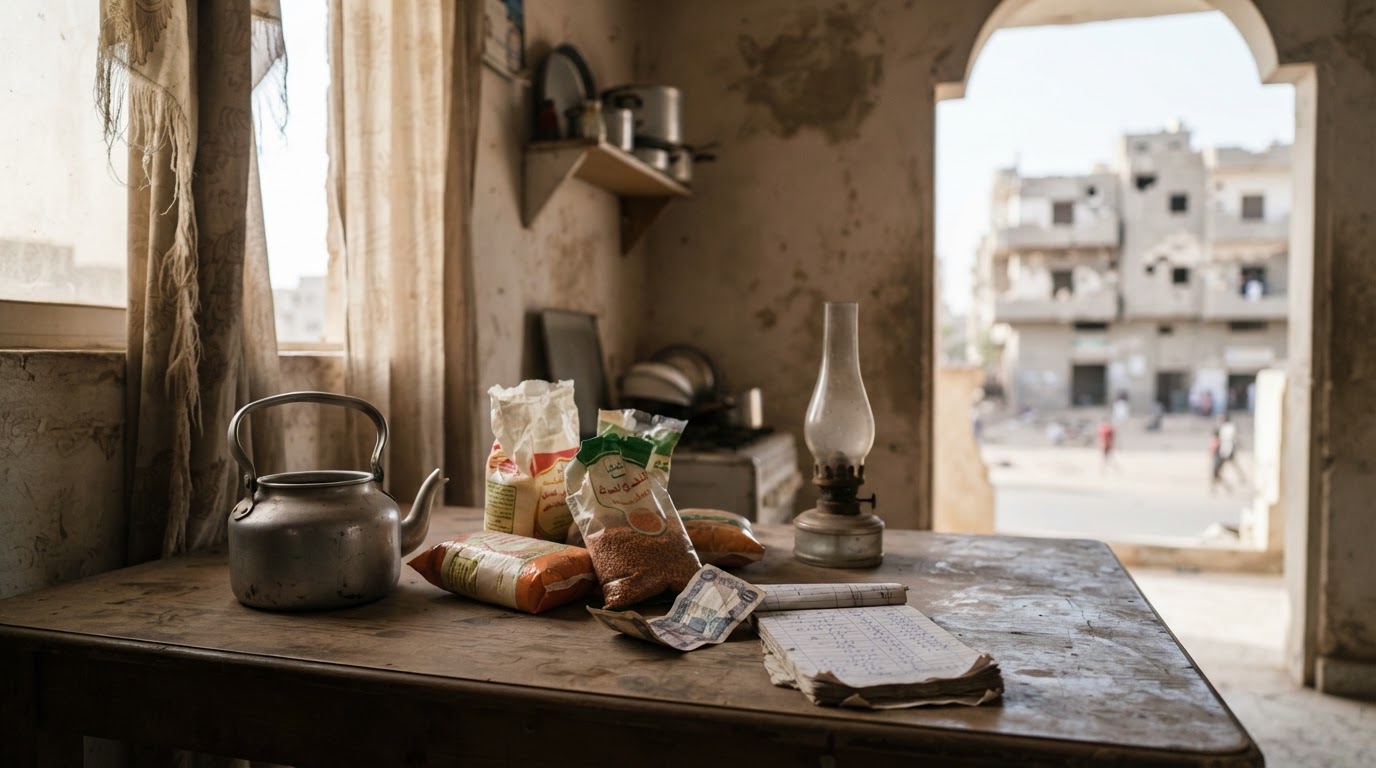
Reporting and photography credited as noted above. Originally published by Al Jazeera. The hero image on this page is an AI-generated illustration created by Valor & Ventures Media — not a photograph from the source publication.
Checking your membership…