Navy Command Builds on Training Partnership During South Korean Visit
U.S. Navy Rear Adm. Greg Huffman met with South Korean navy leaders and delivered remarks aboard the ROKS Hansando during the ship's first port call at Naval Air Station Pensacola, Fla. He emphasized the role of allied partnerships in naval education and training.
Rights: fair use excerpt
No AI assistance disclosed
Executive Summary
Senior maritime leadership from Washington and Seoul recently convened along the Florida coastline to reinforce joint military instruction and bilateral security ties, according to reporting by the Defense Department's news service. During an inaugural stop at the Pensacola naval airfield, American flag officer Greg Huffman visited counterparts from the Republic of Korea aboard the vessel Hansando. The gathering highlighted ongoing bilateral coordination focused on foundational sailor development and institutional instruction.
The occasion marked the first time the South Korean training ship had arrived at the historic Florida panhandle installation, a central hub for American aviation instruction and broader maritime professional development. Addressing assembled officers and trainees on the deck of the visiting ship, Huffman underlined how joint preparation and shared instructional standards underpin the enduring security compact between both countries. The engagement offered a dedicated venue to exchange institutional perspectives on curriculum design, junior officer development, and operational coordination.
Collaborative instructional endeavors remain a critical pillar of multilateral deterrence across the broader Pacific basin. As maritime operational environments grow increasingly complex, cohesive performance between allied sea services depends heavily on working relationships established early in a service member's military career. By aligning institutional training philosophies and fostering professional familiarity between future tactical leaders, both armed services seek to streamline communication protocols and coalition interoperability across distributed fleets.
The diplomatic and instructional exchange also reflects the expanding scope of international partner integration across domestic military schoolhouses. While forward operational deployments typically capture broader public attention, foundational schooling and technical qualification serve as the essential groundwork for allied capability. Hosting international naval delegations at regional domestic hubs allows American training leadership to demonstrate their educational infrastructure, evaluate instructional methodologies, and reinforce relationships critical to regional stability.
For executives, military alumni, and organizational directors across the corporate and civic sectors, the Pensacola summit highlights the practical mechanics of coalition building and institutional talent management. Resilient cross-border operations—whether in modern defense statecraft or international enterprise logistics—rest fundamentally on standardized baseline training and sustained interpersonal trust among emerging leadership cadres. Examining how defense institutions systematize multinational human capital development offers valuable perspective for civilian executives managing organizational alignment, cross-cultural partnerships, and long-range strategic growth.
This Executive Summary is an original synthesis by Valor & Ventures Media editors based on public reporting by DoD News. For the complete original article, please visit the source.
---
Austen McClain, Naval Education and Training Command · DoD News
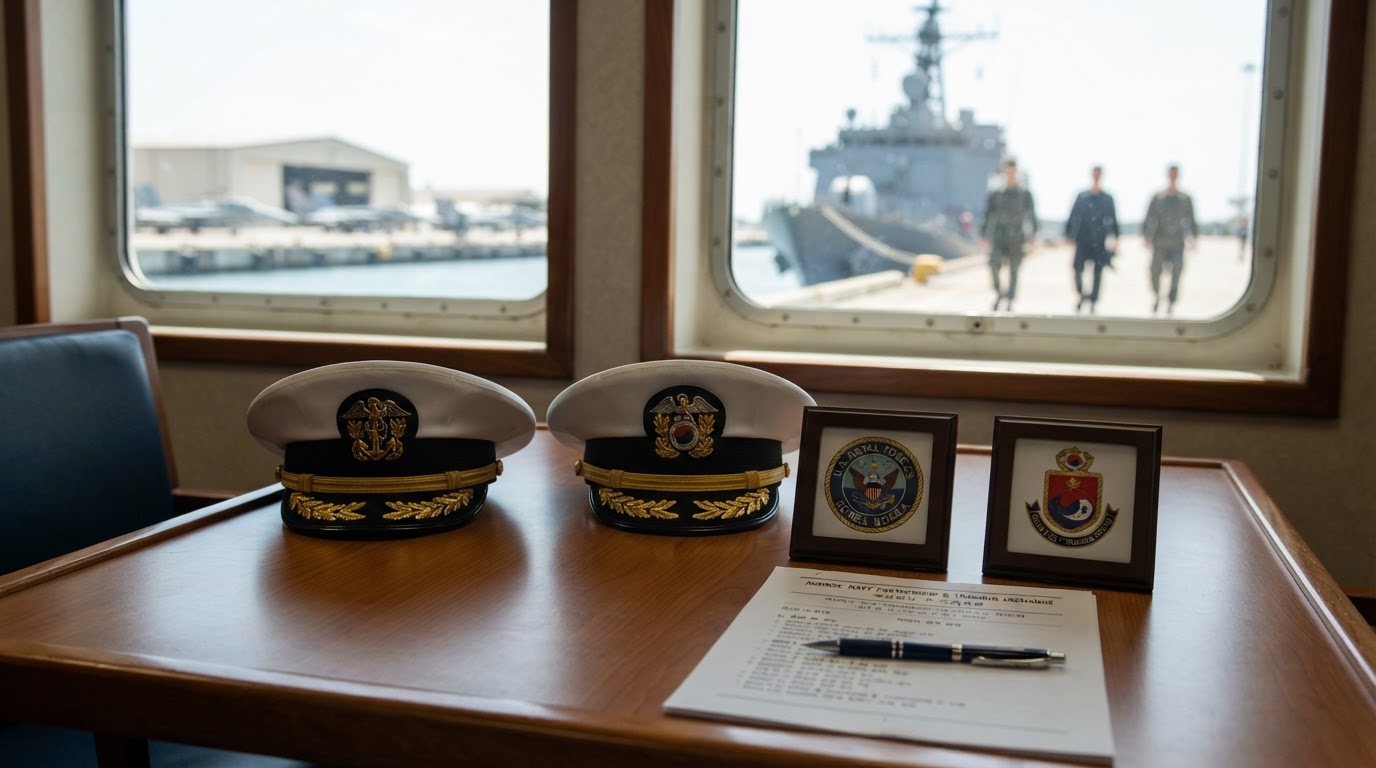
Reporting and photography credited as noted above. Originally published by DoD News. The hero image on this page is an AI-generated illustration created by Valor & Ventures Media — not a photograph from the source publication.
Checking your membership…