The Forum Series on “Coping with AI in Our Communities” Continues Throughout November - Bar Harbor Story | Carrie Jones | Substack
The Forum Series on “Coping with AI in Our Communities” Continues Throughout November Bar Harbor Story | Carrie Jones | Substack
Rights: fair use excerpt
No AI assistance disclosed
Executive Summary
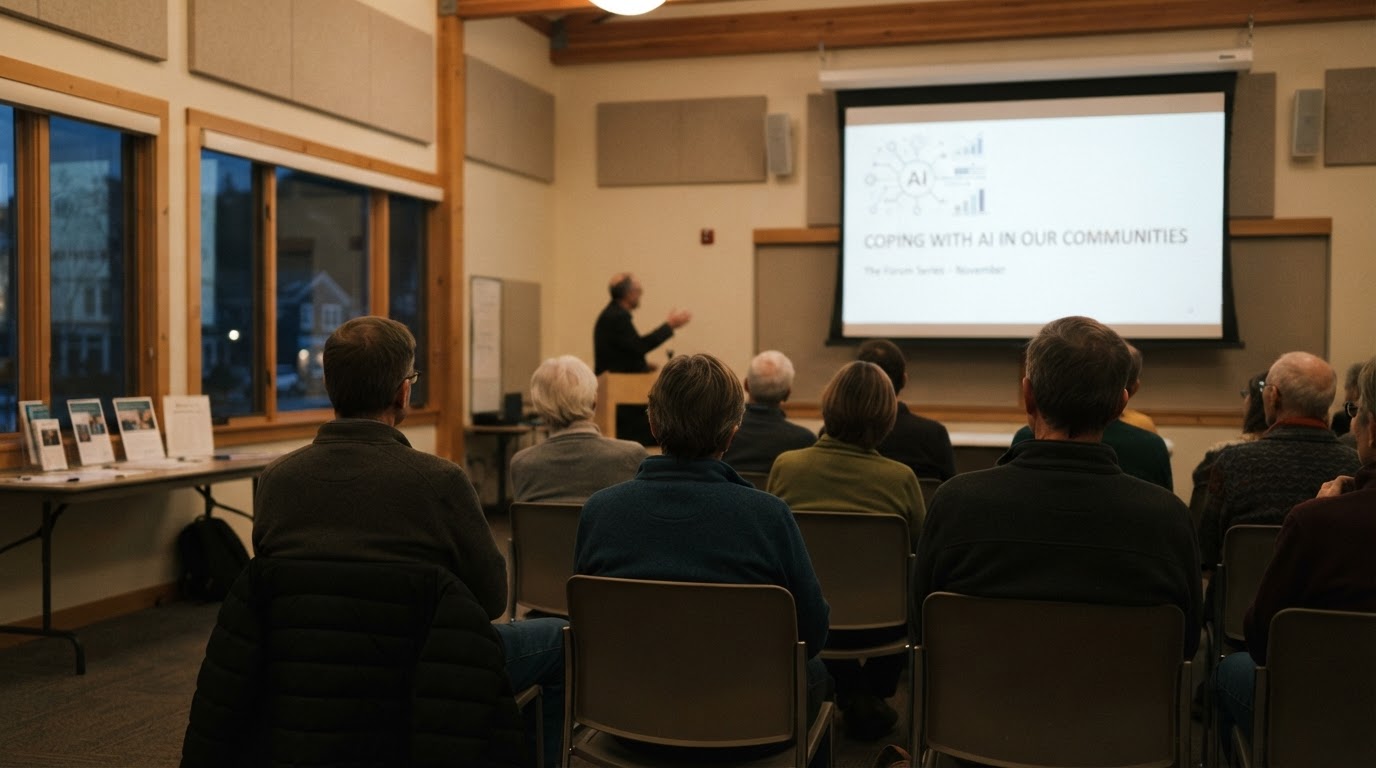
A public dialogue sequence examining how local municipalities handle emerging automation and digital intelligence tools is scheduled to run throughout the month of November, according to reporting distributed by the regional newsletter Bar Harbor Story. Penned by journalist Carrie Jones on the Substack publishing network, the coverage highlights an ongoing municipal panel initiative designed to help residents and neighborhood stakeholders navigate the rapid onset of modern computational algorithms within their daily civic lives.
The programming addresses the growing need for regional areas to confront the practical and ethical dilemmas posed by computational automation. According to the publication, regional town assemblies and informational workshops are serving as a focal point for understanding how technological transformation reshapes local institutions, municipal operations, and neighborhood economies. Rather than leaving the implications of algorithmic tools solely in the hands of major technological conglomerates or national regulatory bodies, the initiative underscores grassroots engagement where everyday citizens evaluate the societal footprint of advanced machine learning.
While comprehensive procedural agendas and panelist rosters for the scheduled assemblies remain centered on monthly regional calendars, the reporting emphasizes sustained continuity across these November sessions. The outlet indicates that the informational series seeks to demystify complex software platforms, examining both constructive possibilities and disruptive threats within municipal governance and educational frameworks. By fostering direct communication between civic participants, these community gatherings attempt to build collective resilience and informed oversight in regions outside primary commercial technology corridors.
The focus on localized assessments reflects a broader realization that technological disruption lands most acutely at the municipal level, where budgets, public services, and small business networks must adjust in real time. Independent community-based publications such as Jones's newsletter serve as critical conduits for tracking these dialogues, ensuring residents remain informed about developmental shifts that might otherwise receive minimal grassroots examination. As algorithmic platforms become increasingly embedded into routine workflows, rural and suburban areas face distinct operational hurdles that differ substantially from metropolitan tech epicenters.
For business founders, civic organizers, and veteran executives, the local seminar cycle exemplifies the necessity of active leadership amid technological disruption. As synthetic intelligence and automated systems expand across regional supply chains, local governance, and enterprise environments, leaders must engage directly with community sentiment and operational adjustments. Understanding grassroots perspectives on computational automation enables executives and civic authorities to implement new operational models with strategic foresight, ensuring innovation aligns constructively with neighborhood priorities and workforce stability.
This Executive Summary is an original synthesis by Valor & Ventures Media editors based on public reporting by Google News — Gov Shutdown. For the complete original article, please visit the source.
---
Google News — Gov Shutdown
Reporting and photography credited as noted above. Originally published by Google News — Gov Shutdown. The hero image on this page is an AI-generated illustration created by Valor & Ventures Media — not a photograph from the source publication.
Checking your membership…