Archer anticipates Q4 revenue of $5M-$6M as Midnight starts Los Angeles operations under FAA market survey certificate
Rights: fair use excerpt
No AI assistance disclosed
Executive Summary
Electric aircraft developer Archer has issued fourth-quarter revenue guidance projected between $5 million and $6 million, coinciding with the launch of flight operations for its Midnight aircraft in the Los Angeles area. According to Seeking Alpha, the company is conducting these initial regional activities under an official market survey certificate granted by the Federal Aviation Administration. The operational milestone highlights a critical transition phase as next-generation aviation manufacturers seek to move beyond pure development testing into active metropolitan environments.
The deployment of the Midnight platform in Southern California under federal market survey authorization establishes a structured operational framework within active civil airspace. These specialized certifications enable aerospace companies to conduct flight profiles, assess operating logistics, and validate aircraft performance under real-world conditions. Securing clearance from federal aviation regulators to operate in the Los Angeles region allows the enterprise to examine critical ground handling procedures, air traffic integration protocols, and market demand dynamics within one of the most traffic-dense metropolitan centers in the country.
From a corporate and fiscal standpoint, establishing early revenue expectations marks a meaningful inflection point for the advanced air mobility sector. Companies developing novel electric vertical takeoff and landing architectures have historically operated as high-expenditure research enterprises facing long capital cycles. Realizing an estimated $5 million to $6 million in fourth-quarter revenue reflects the emergence of initial commercialization streams, offering stakeholders and industry observers a preliminary baseline to measure broader commercial traction and operational scale.
The strategic focus on Los Angeles underscores the practical challenges and opportunities inherent in modernizing urban transportation infrastructure. Operating within a major coastal metropolis requires careful alignment with complex regional airspace controls, stringent community safety expectations, and municipal logistics planning. Demonstrating functional aircraft capability in such a high-profile corridor serves as an essential proving ground for verifying whether advanced aerial mobility concepts can realistically address regional transit bottlenecks and support scalable commuter operations.
For enterprise leaders, military veterans, and technology founders, the progression of advanced aviation platforms into regional testing offers valuable insights into navigating heavily regulated high-tech industries. Transitioning frontier hardware from engineering laboratories to operational environments demands persistent regulatory engagement, prudent capital management, and clear-eyed execution. As companies in the aerospace sector work toward establishing sustainable commercial models, their ability to combine regulatory compliance with steady revenue generation provides an important reference point for leadership across dual-use and frontier technology ecosystems.
This Executive Summary is an original synthesis by Valor & Ventures Media editors based on public reporting by Seeking Alpha. For the complete original article, please visit the source.
---
Seeking Alpha
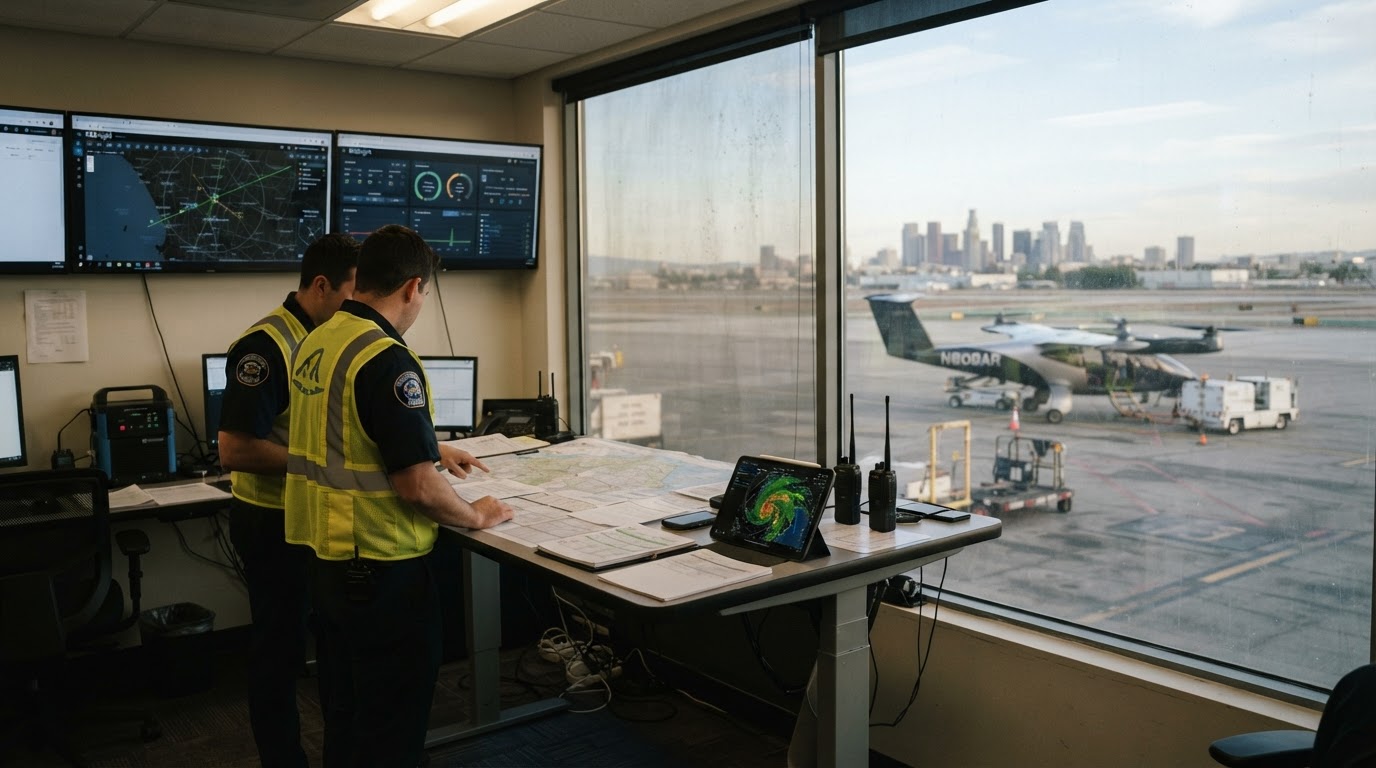
Reporting and photography credited as noted above. Originally published by Seeking Alpha. The hero image on this page is an AI-generated illustration created by Valor & Ventures Media — not a photograph from the source publication.
Checking your membership…